
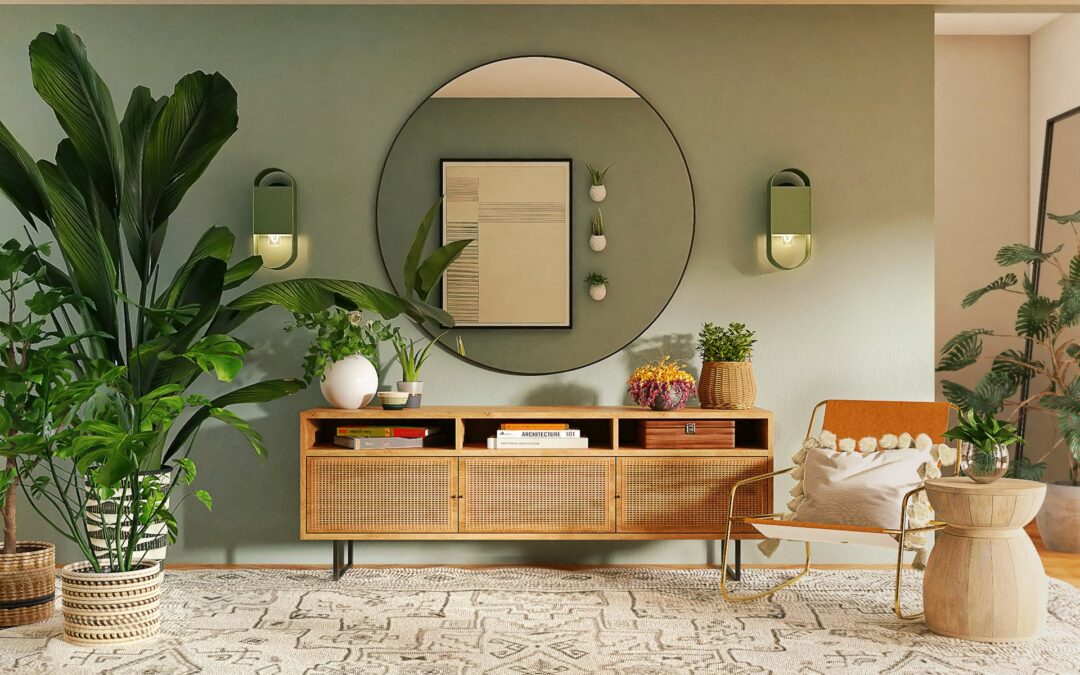
A home that looks great can still feel off if materials irritate allergies, finishes linger in the air, or furniture wears out too fast. Sustainable interior design solves those pain points by prioritizing healthier choices that perform over time.
At Ambiance Creations, we focus on quality, integrity, functionality, and uniqueness, so your space feels as good as it looks.
Inside, you’ll find reader-friendly tips on low-tox finishes, durable materials, and simple energy upgrades that make sustainability practical, room by room.
Principles of Sustainable Interior Design
Sustainable interior design relies on materials and methods that reduce environmental harm while supporting healthy living spaces. These principles shape what you buy, how you use resources, and how long your design choices stay relevant.
Key Concepts of Sustainability
Sustainable interior design focuses on three main goals: protecting the environment, supporting human health, and making choices that last. Consider where materials come from, how they affect indoor air quality, and whether they can be reused or recycled later.
Eco-friendly materials like bamboo, reclaimed wood, recycled metal, and natural fibers such as organic cotton or wool use fewer resources and typically avoid harsh chemicals. Look for certifications like FSC for wood products or GREENGUARD for low-emission materials.
Energy efficiency matters, too. Choose LED lighting, energy-efficient appliances, and window treatments that help control temperature. Whenever possible, let natural light do the heavy lifting.
Life Cycle Thinking
Life cycle thinking means considering what happens to a product from start to finish. How are materials extracted, manufactured, transported, used, and eventually disposed of or recycled?
Ask yourself before making design choices:
- How far did this material travel to reach you?
- What resources went into making it?
- How long will it last?
- Can you repair it if it gets damaged?
- What happens when you no longer need it?
Choosing durable furniture and timeless designs helps cut down on waste. A well-made sofa that lasts 20 years is far better for the environment than replacing a cheaper piece every few years. You also avoid sending items to landfills too soon. Not a bad bonus.
Minimizing Environmental Impact
You can reduce environmental harm with simple, practical choices in your design work. Start by using what you already have instead of buying everything new. Repurposing existing furniture or materials saves resources and often adds character to your space.
Water conservation matters in kitchens and bathrooms. Install low-flow faucets and fixtures to cut water use, which is rarely a hardship. Pick materials that don’t need harsh chemical cleaners. It’s better for you and the planet.
Non-toxic materials protect your health and the environment. Skip products with VOCs, formaldehyde, or heavy flame retardants. Paints, adhesives, and finishes now come in low-VOC or zero-VOC options.
Local sourcing reduces transportation emissions and supports your community. Materials made nearby require less fuel to reach you and often align with regional environmental standards.
Eco-Friendly Materials and Products
Choosing the right materials for your interior spaces can lower environmental impact while creating a healthier home. Recycled materials, natural resources, and non-toxic finishes each play a distinct role in sustainable interior design.
Recycled and Upcycled Materials
Recycled materials give new life to items that might otherwise end up in landfills. You can find furniture made from recycled plastics, turning waste into durable seating and storage.
Reclaimed wood from old barns or factories adds character to floors, walls, and furniture while saving trees. Metal, like aluminum and steel, recycles well and appears in light fixtures, table frames, and accents.
Upcycled materials take a different approach. Instead of breaking items down, designers transform them into something new. Old doors become headboards. Vintage windows can become picture frames. This creative reuse reduces waste and adds a unique touch.
Glass is highly recyclable and shows up in countertops, tiles, and decorative objects. Recycled glass can cost less than new materials while still offering strong durability and style.
Natural and Renewable Resources
Bamboo grows much faster than traditional hardwood trees, often reaching maturity in 3 to 5 years. You can use it for flooring, furniture, and even fabric. It’s strong, moisture-resistant, and naturally antibacterial.
Cork comes from the bark of cork oak trees, which regrows after harvest. This makes cork a renewable option for flooring and wall coverings. It provides natural insulation and feels soft underfoot.
Natural textiles like organic cotton, linen, and hemp work well for curtains, upholstery, and bedding. These materials grow without synthetic pesticides and typically use less water than conventional options. Wool offers excellent insulation and naturally resists fire and stains.
Rattan and jute bring an easy, tropical texture to furniture and rugs. Both grow quickly and require minimal processing, which keeps their environmental impact lower.
Low-VOC and Non-Toxic Finishes
Volatile organic compounds (VOCs) are chemicals that evaporate into the air from paints, stains, and adhesives. They can cause headaches, dizziness, and longer-term health concerns.
Low-VOC or zero-VOC products protect indoor air quality. Look for healthier finish options:
- Water-based paints instead of oil-based
- Natural oil stains made from linseed or tung oil
- Milk paint made from milk protein, lime, and natural pigments
- Beeswax and carnauba wax for wood protection
Many products list VOC content. Anything under 50 grams per liter is generally considered low-VOC. Zero-VOC is often under 5 grams per liter.
Natural finishes can take longer to dry, but they don’t release strong fumes. You can also find plant-based adhesives that perform like conventional glues. Clay- and lime-based plasters create breathable, non-toxic wall finishes that naturally regulate humidity.
Energy Efficiency in Interior Spaces
Reducing energy use at home starts with smart choices for lighting, temperature control, and everyday appliances. These changes can lower utility costs and reduce environmental impact.
Lighting Solutions
Natural light should be your first choice. Place mirrors across from windows to bounce daylight deeper into rooms. Keep window treatments light and sheer during the day to let sunlight fill the space.
For artificial lighting, LED bulbs use significantly less energy than incandescent bulbs and last longer, so you replace them less often. Install dimmer switches to adjust light levels throughout the day.
Layer lighting with multiple sources rather than relying on one overhead fixture. Task lighting supports reading or cooking, while accent lights highlight features. Motion sensors work well in hallways, closets, and bathrooms where lights often get left on.
Consider bulb color temperature, too. Warm light (around 2700–3000K) feels cozy in living areas, while cooler light (3500–4100K) is better for kitchens and workspaces.
Smart Temperature Control
A programmable thermostat can reduce heating and cooling costs by about 10% per year. Set it to lower temperatures while you sleep or when you’re away. Smart models can learn routines and adjust automatically.
Ceiling fans help circulate air and use less energy than air conditioning. Run them counterclockwise in summer for a cooling breeze, and clockwise in winter to push warm air down.
Seal gaps around windows and doors with weatherstripping to reduce air leaks. Add insulation in walls and attics if needed. Heavy curtains or cellular shades can provide extra insulation during extreme temperatures.
Energy-Efficient Appliances
Look for the ENERGY STAR label when purchasing appliances. These products meet energy efficiency guidelines set by the EPA.
Your refrigerator runs around the clock, so efficiency matters. Keep it at 37–40°F and the freezer at 0–5°F for best performance. Clean the coils twice a year to help them run efficiently.
Front-loading washers typically use less water and energy than top-loaders. Wash clothes in cold water when possible, since heating water accounts for most of a washing machine’s energy use.
Sustainable Furniture and Decor Choices
Sustainable interior design isn’t just about finishes. Furniture and decor choices shape material use, waste, and long-term adaptability, while still supporting a polished, personal aesthetic.
Ethical Sourcing
When you buy furniture, materials, and manufacturing methods matter. Look for pieces made from reclaimed wood, bamboo, or FSC-certified lumber, which come from responsible forestry practices.
Recycled materials offer a strong alternative. Many makers produce attractive furniture from recycled plastics, metal, and glass, keeping waste out of landfills and reducing the need for new raw materials.
Check third-party certifications like GREENGUARD or Cradle to Cradle. These labels indicate the furniture meets environmental and health standards and contains fewer harmful chemicals.
Key certifications to look for:
- FSC (Forest Stewardship Council)
- GREENGUARD Gold
- Cradle to Cradle
- Fair Trade Certified
Modular and Multifunctional Designs
Modular furniture grows and changes with your life. These pieces can be reconfigured, expanded, or scaled down as your needs shift.
A modular sofa might start small and expand later. Multifunctional pieces save space and resources, like an extendable dining table or a bed frame with built-in storage, meaning you buy less overall.
This approach reduces waste and often saves money over time. These designs last longer because they adapt instead of becoming obsolete.
Local Artisans and Producers
Buying from local makers reduces transportation emissions and supports your community. Local furniture travels fewer miles, which means a smaller carbon footprint.
Artisans often use traditional methods and regional materials, creating distinctive pieces while preserving craft skills. When possible, visiting workshops helps you understand how items are made and appreciate the care behind them.
Local producers may make pieces to order or in small batches, reducing overproduction and waste compared to mass manufacturing. You also get personalized service and can often request custom sizing or finishes.
Wellness and Indoor Environmental Quality
Your indoor environment affects physical health, mental clarity, and emotional balance. Strategic decisions in materials, ventilation, and spatial planning can reduce toxins and support daily well-being, which is a core goal of sustainable interior design.
Biophilic Design Elements
Biophilic design connects you to nature through intentional interior choices. This can include natural materials like wood and stone, along with plants and nature-inspired textures.
Potted plants can improve air quality and help reduce stress. Even small additions matter, like herbs on a windowsill or a single large plant anchoring a corner.
Natural textures add sensory links to the outdoors. Bamboo flooring, cork wall treatments, or stone surfaces can feel grounded and calming.
Water features, like a small fountain, can create soft ambient sound that masks noise. Nature-based patterns in wallpaper, textiles, or art can offer similar benefits when living plants aren’t practical.
Air Quality Improvements
Indoor air quality matters because most people spend significant time inside. Poor air can contribute to headaches, fatigue, and long-term health concerns.
Choose paints, adhesives, and finishes with low or zero VOCs. These chemicals can off-gas for months after installation. Low-emission options are widely available and often comparable in cost.
Flooring also impacts air quality. Avoid materials that may contain formaldehyde, including some laminates and composite products. Solid hardwood, natural linoleum, and ceramic tile typically release fewer harmful substances.
Ventilation improvements:
- Install HEPA air filters in your HVAC system
- Use exhaust fans in kitchens and bathrooms
- Open windows regularly for fresh air
- Add mechanical ventilation in tightly sealed, energy-efficient homes
Natural Light Utilization
Natural light supports sleep cycles and mood while lowering energy use. It also makes rooms feel larger and more inviting. Arrange furniture to capture daylight during work hours, placing desks and reading chairs near windows when possible.
Avoid blocking windows with heavy curtains or tall furniture. Light-colored walls and reflective surfaces help sunlight travel deeper into the room. Mirrors placed opposite windows can dramatically increase brightness. Glass doors can help light flow through multiple spaces, not just one room.
For darker hallways, interior bathrooms, or rooms set back from exterior walls, consider skylights or solar tubes to bring daylight where windows can’t. Window treatments should help you control glare and privacy as the day shifts while still supporting a bright, breathable atmosphere.
Design That Supports How You Live
Living with poor air quality, worn finishes, or short-lived furnishings can quietly affect comfort and well-being. Sustainable interior design addresses those issues with healthier materials, smarter layouts, and choices that hold up over time.
The result is a home that feels better day to day, functions effortlessly, and reflects values without sacrificing style or performance.
If you’re ready to create a space that works harder for your health and lifestyle, Ambiance Creations is here to guide the process. Get in touch.
Frequently Asked Questions
What is sustainable interior design?
Sustainable interior design focuses on creating spaces that are healthier, longer-lasting, and less harmful to the environment. It prioritizes durable materials, low-tox finishes, energy efficiency, and thoughtful sourcing without sacrificing comfort or style.
Is sustainable interior design more expensive?
Sustainable choices are often an upfront investment, but they typically reduce long-term costs. Durable materials, energy-efficient lighting, and quality furnishings last longer and require fewer replacements over time.
Where should I start with sustainable interior design?
Start with high-impact, low-disruption changes. Swap to low-VOC paints, upgrade to LED lighting, improve ventilation, and choose better-quality furniture instead of fast replacements. Small steps add up quickly.
Are eco-friendly materials durable enough for everyday living?
Yes. Many sustainable materials, such as bamboo, cork, reclaimed wood, and recycled metals, are selected specifically for strength and longevity. When properly specified, they perform as well as or better than conventional options.
How does sustainable interior design improve indoor air quality?
It reduces exposure to VOCs, formaldehyde, and other toxins found in paints, adhesives, flooring, and furniture. Better ventilation, cleaner materials, and natural finishes help create healthier indoor air.
Can sustainable interior design still look high-end?
Absolutely. Sustainable interior design supports refined aesthetics through timeless materials, custom craftsmanship, and thoughtful detailing. Sustainability enhances quality and character rather than limiting design options.
Do I need to renovate my entire home to be sustainable?
No. Sustainable interior design works best when applied gradually. You can update one room at a time, focusing on materials, lighting, and furniture choices that align with long-term performance and wellness.
How do I know if a product is truly sustainable?
Look for third-party certifications such as FSC, GREENGUARD, or Cradle to Cradle. Transparency in sourcing, material composition, and emissions is a strong indicator of responsible manufacturing.
Does sustainable interior design affect resale value?
Homes with healthier materials, efficient systems, and durable finishes are increasingly attractive to buyers. Sustainable interior design can enhance long-term value by improving performance, comfort, and longevity.
Can sustainable interior design work in any style?
Yes. Sustainable interior design principles apply to modern, traditional, coastal, and transitional spaces alike. The approach focuses on how materials perform and age, not on a specific aesthetic.