
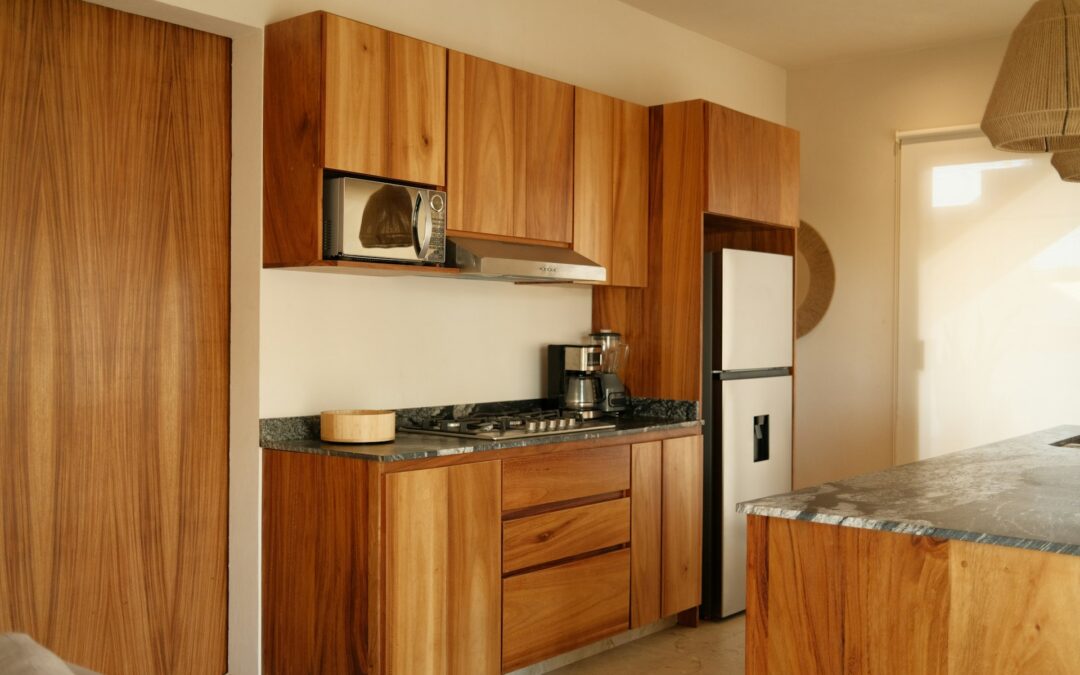
Kitchen cabinets shape how your kitchen looks and works. They take up a large amount of visual space and hold dishes, food, and everyday tools. Thoughtful kitchen cabinet design influences both the beauty and efficiency of your cooking space.
At Ambiance Creations, we approach kitchen cabinet design as both an aesthetic and functional investment. The right cabinetry should balance style, durability, and smart storage so your kitchen works effortlessly every day.
This guide explores the essentials of kitchen cabinet design, including cabinet styles, materials, finishes, layout ideas, and modern features that make cabinets more functional for daily cooking and organization.
Popular Kitchen Cabinet Styles
Cabinet styles set the tone for your kitchen and reflect your personal taste. The right choice depends on your preferred aesthetic, from clean-lined modern looks to warm traditional designs.
Contemporary and Modern Designs
Modern cabinet styles focus on clean lines and minimal detailing. Flat-panel slab doors are common, with no raised details or decorative trim. Handleless designs are also popular. Push-to-open mechanisms or integrated pulls maintain a sleek and seamless appearance.
Common features include:
- High-gloss or matte finishes in bold colors
- Horizontal grain patterns
- Metal or glass accents
- Frameless construction that maximizes storage
Contemporary kitchen cabinet design pairs well with stainless steel appliances and quartz countertops. Mixing materials, such as wood and lacquer, adds visual interest while maintaining a clean and uncluttered aesthetic.
Traditional Cabinet Looks
Traditional cabinets bring warmth and timeless elegance to the kitchen. This style often features raised-panel doors, decorative molding, and rich wood finishes like cherry, maple, or oak.
Face-frame construction is common in traditional cabinetry. The frame around each cabinet opening creates a furniture-like appearance.
Key characteristics include:
- Crown molding along the top
- Decorative corbels and posts
- Arched door frames
- Antique or brass hardware finishes
Traditional kitchen cabinet design works beautifully with granite countertops and decorative backsplashes. The detailed craftsmanship and classic proportions help create a timeless kitchen environment.
Transitional Styles
Transitional cabinetry blends modern simplicity with traditional warmth. This approach to kitchen cabinet design is popular for its flexibility.
Shaker-style cabinets are a leading choice. They feature a recessed center panel and a simple frame without ornate details.
Hardware and finishes can shift the look in different directions:
- Minimal knobs for a modern feel
- Decorative pulls for a more classic style
Transitional cabinets work well alongside both modern and traditional design elements, creating a kitchen that feels current without appearing overly trendy.
Rustic and Farmhouse Inspirations
Rustic and farmhouse cabinets create a relaxed and welcoming atmosphere. These styles emphasize natural wood textures, distressed finishes, and handcrafted details.
Farmhouse cabinetry often includes beadboard panels, open shelving, and painted finishes in soft whites or muted tones. Visible wood grain and knots add personality.
Popular elements include:
- Distressed or weathered paint finishes
- Wire mesh or textured glass inserts
- Butcher block countertops
- Vintage-style bin pulls and cup handles
This type of kitchen cabinet design is ideal for homeowners seeking a cozy and inviting kitchen space.
Materials and Finishes
Cabinet materials significantly influence durability, appearance, and design flexibility. The finish you choose also determines how well cabinets withstand everyday use.
Solid Wood Choices
Solid wood remains a classic option in kitchen cabinet design because of its durability and natural beauty.
Popular solid wood options include:
- Oak: Strong grain and excellent durability
- Maple: Smooth grain and clean appearance
- Cherry: Rich color that deepens with age
- Walnut: Dark tone with elegant grain patterns
- Birch: Cost-effective with a fine grain
Solid wood cabinets handle wear well and can be refinished multiple times. They are ideal for homeowners seeking a warm and natural aesthetic. The primary considerations are cost and sensitivity to humidity. Wood expands and contracts with moisture, but with proper care, solid wood cabinets can last for decades.
Engineered Wood and Laminates
Engineered materials provide stable and affordable alternatives to solid wood in kitchen cabinet design.
Plywood consists of thin layers of wood bonded together. It offers excellent strength, holds screws securely, and resists moisture better than solid wood. Many cabinet makers prefer plywood for cabinet boxes.
MDF (Medium-Density Fiberboard) delivers extremely smooth surfaces, making it ideal for painted cabinets. Because it has no grain pattern, paint finishes appear consistent and refined.
Particleboard is the most economical option, but also the least durable. It works best in dry areas since exposure to moisture can cause swelling.
Laminate is a decorative layer applied over engineered wood. It comes in many colors and patterns, including realistic wood looks. Laminate surfaces resist stains and moisture but cannot be refinished like wood.
Glass and Metal Accents
Glass and metal accents enhance kitchen cabinet design by adding contrast and visual interest. Glass cabinet doors allow homeowners to display dishes or decorative pieces. Frosted or textured glass offers a softer look while partially concealing cabinet contents.
Metal elements appear in hardware, trim, and occasionally door panels. Stainless steel complements modern appliances and is easy to maintain. Brass and bronze create warmth in traditional kitchens. Metal frames combined with glass inserts introduce an industrial or professional kitchen feel.
Paints, Stains, and Custom Finishes
Cabinet finishes protect the material while defining the final appearance. Painted cabinets completely cover the wood surface. White and gray remain among the most popular colors for modern kitchen cabinet design. MDF is often used for painted finishes because of its smooth surface.
Stained finishes allow natural wood grain to remain visible. Stains range from light natural tones to deep espresso hues.
Protective topcoats, seal paint, or stain:
| Finish Type | Durability | Appearance | Best For |
| Polyurethane | Very high | Slight sheen | Heavy-use kitchens |
| Lacquer | High | Very smooth | Modern designs |
| Varnish | High | Warm glow | Traditional cabinetry |
| Wax | Low | Soft finish | Light-use areas |
Matte finishes hide fingerprints and minor imperfections. Glossy finishes reflect light and intensify color but require more frequent cleaning. Semi-gloss offers a balanced middle ground.
Cabinet Layouts and Storage Solutions
Smart cabinet layout is essential in kitchen cabinet design because it determines how efficiently you move through your space.
Base, Wall, and Tall Cabinet Configurations
Base cabinets sit on the floor and typically measure 24 inches deep and 34.5 inches tall. These cabinets support countertops and store heavy cookware and appliances.
Wall cabinets mount above countertops and usually measure 12–13 inches deep. They keep dishes and ingredients within convenient reach. Tall cabinets, often used as pantry units, extend from floor to ceiling or nearly to the ceiling. They maximize vertical storage space.
Common cabinet heights include:
- Base cabinets: 34.5 inches
- Wall cabinets: 30–42 inches
- Tall cabinets: 84–96 inches
Thoughtful cabinet configuration ensures both accessibility and efficiency.
Corner and Pull-Out Solutions
Corner cabinets often waste space without the right storage solution. Lazy Susans rotate items into view and improve accessibility. Pull-out shelves bring items from the back of cabinets forward, eliminating the need to reach deep inside.
Additional solutions include:
- Pull out trash and recycling bins
- Diagonal corner cabinets
- Magic corner pull-out systems
These features make kitchen cabinet design significantly more functional.
Built-In Organizers
Built-in cabinet organizers help maximize storage while keeping items easy to access. Drawer dividers separate utensils, knives, and kitchen tools. Many are adjustable, so they can adapt as your storage needs change.
Rollout trays act like drawers inside base cabinets and are excellent for heavy cookware or pantry goods. Vertical dividers allow baking sheets, cutting boards, and platters to stand upright instead of stacking.
Door-mounted racks provide extra storage for spices or cleaning supplies without occupying shelf space.
Modern Features and Hardware
Modern kitchen cabinet design integrates hardware and technology that improve usability and durability.
Soft-Close Hinges and Drawer Slides
Soft-close hardware prevents cabinet doors and drawers from slamming. Dampeners slow movement during the final inches of closing, ensuring a smooth and quiet finish.
Two main types include:
- Hinges with built-in dampeners for doors
- Drawer slides with soft-close mechanisms
These features reduce wear on cabinetry and significantly lower kitchen noise levels.
Smart Storage Accessories
Modern cabinetry includes specialized organizers that maximize every inch of storage.
Examples include:
- Pull-out shelves for deep cabinets
- Drawer dividers for utensils and spices
- Vertical storage for baking sheets
- Hidden trash and recycling pull-outs
These accessories can be installed during a cabinet renovation or retrofitted into existing cabinets.
Cabinet Handles and Knobs
Hardware plays an important role in both function and style. Pull handles work well on drawers and large doors, while knobs suit smaller cabinet doors.
Popular hardware styles include:
- Matte black or stainless bar pulls for modern kitchens
- Brushed brass finishes for updated traditional styles
- Cup pulls for farmhouse aesthetics
- Integrated edge pulls for seamless cabinetry
Proper hardware placement improves comfort and usability.
Customizations and Personalization
Customization allows homeowners to tailor their kitchen cabinet design to their lifestyle and aesthetic preferences.
Mixing Colors and Textures
Two-tone cabinets add depth and contrast to kitchen design. A popular approach is pairing darker lower cabinets with lighter upper cabinets, which can visually expand the space. Another option is using one color for the island and another for the surrounding cabinets.
Texture combinations also add interest. Examples include painted cabinet doors paired with natural wood grain or matte finishes contrasted with glossy surfaces. Maintaining consistent undertones helps ensure the color palette feels cohesive.
Open Shelving Concepts
Open shelving replaces some upper cabinets with exposed shelves, creating a lighter and more open kitchen.
This approach works well for displaying frequently used or decorative items such as:
- White dishes and glassware
- Cookbooks
- Decorative bowls
- Coffee mugs
- Spice jars
Open shelving works best near prep areas or coffee stations where items are used regularly.
Lighting Integration
Integrated cabinet lighting enhances both function and atmosphere. Under-cabinet LED strips eliminate shadows on countertops and improve visibility during food preparation. Interior cabinet lighting makes it easier to see items inside deep drawers or tall cabinets.
Additional lighting options include:
- Motion-sensor cabinet lights
- Toe-kick lighting for nighttime navigation
- Above-cabinet lighting that reflects softly off the ceiling
These lighting elements enhance the visual impact and practicality of kitchen cabinet design.
Designing Cabinets That Elevate Everyday Living
A great kitchen cabinet design combines style, durability, and intelligent storage. The right materials, finishes, and layout choices ensure your kitchen functions efficiently while reflecting your personal style.
Investing in high-quality cabinetry allows your kitchen to remain both beautiful and practical for years. Thoughtful cabinet planning improves organization, enhances workflow, and supports the way you cook and live.
At Ambiance Creations, thoughtful design and expert craftsmanship guide every cabinetry project. Get in touch to explore how a tailored kitchen cabinet design can transform your home.
Frequently Asked Questions
What is the most popular kitchen cabinet design style today?
One of the most popular approaches to kitchen cabinet design today is the transitional style. It blends modern simplicity with traditional warmth, creating a balanced look that works in many homes.
Shaker cabinets remain a leading choice because of their clean lines and versatility. They pair well with modern hardware, natural wood finishes, and a wide range of countertop materials.
What materials are best for kitchen cabinet design?
Solid wood, plywood, and MDF are among the most commonly used materials in kitchen cabinet design. Each option offers different advantages depending on durability, finish, and long-term performance.
Solid wood provides natural beauty and longevity, while plywood offers strong structural stability. MDF is often preferred for painted cabinets because it produces a very smooth surface.
How do I choose the right finish for kitchen cabinets?
Choosing the right finish depends on both style and maintenance preferences. Painted cabinets create a clean, modern look, while stained finishes highlight natural wood grain.
Matte and satin finishes are popular in kitchen cabinet design because they hide fingerprints and small imperfections. Gloss finishes reflect more light but typically require more frequent cleaning.
What cabinet layout works best for a kitchen?
A functional cabinet layout should support the natural workflow of cooking, cleaning, and food storage. Most kitchens rely on a combination of base cabinets, wall cabinets, and tall pantry cabinets.
In a well-planned kitchen cabinet design, these elements work together to keep everyday items accessible while maximizing storage space throughout the kitchen.
Are custom cabinets worth the investment?
Custom cabinets are often worth the investment because they are designed specifically for your kitchen’s layout and your storage needs. Custom kitchen cabinet design allows for better space optimization, personalized finishes, and integrated storage features that improve everyday functionality.
What modern features should kitchen cabinets include?
Modern cabinetry often includes soft-close hinges, pull-out shelves, and built-in organizers that improve convenience and usability. These features enhance kitchen cabinet design by reducing noise, improving accessibility, and making it easier to keep the kitchen organized.