
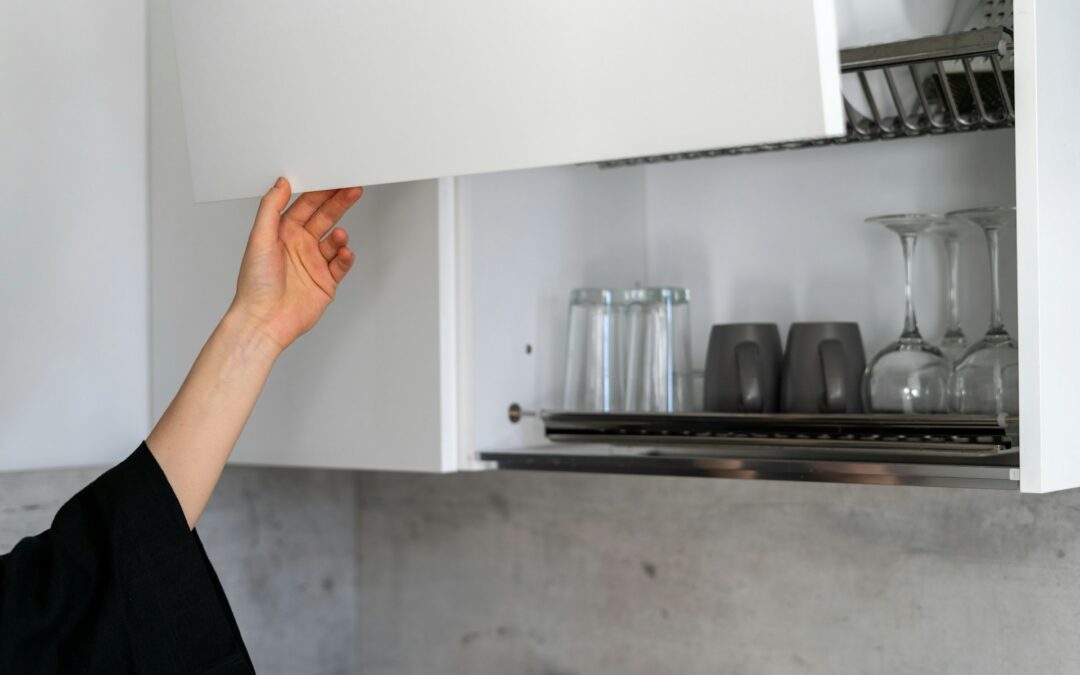
Many kitchens feel closed-in or cluttered because solid cabinets hide everything behind heavy doors. Glass-front cabinets solve that problem by introducing light, openness, and a curated way to display everyday pieces without sacrificing storage.
At Ambiance Creations, thoughtful kitchen design focuses on both beauty and function. Glass-front cabinets allow homeowners to showcase dishes, glassware, and collections while keeping kitchens organized and visually lighter.
In this article, you’ll learn how to choose the right styles, where to place them for the best visual impact, and how to maintain clear, streak-free glass so your cabinetry always looks polished.
What Are Glass-Front Cabinets?
Glass-front cabinets are storage units with doors featuring glass panels rather than solid wood or other opaque materials. They allow you to see what’s inside while keeping items protected from dust and everyday kitchen wear.
Key Features of Glass-Front Cabinets
The doors swing open for easy access to dishes, serving pieces, or decorative items. The glass panel usually fills most of the cabinet door, turning the cabinet into a display feature as well as functional storage.
These cabinets appear in kitchens, bathrooms, living rooms, and offices. They are ideal for displaying dishes, glassware, collectibles, or other pieces you want to keep visible but protected.
Cabinet frames may be made of wood, metal, or composite materials. Most designs include sturdy hinges and supportive hardware to safely handle the weight of glass panels.
Types of Glass Used in Cabinet Doors
Clear glass is the most common option. It provides a completely unobstructed view of the cabinet’s contents and works well in both modern and classic kitchens.
Frosted or textured glass softens visibility while still allowing light to pass through. This option adds subtle privacy without closing off the space.
Seeded glass contains tiny bubbles that create a vintage look. Reeded glass uses vertical ridges that partially obscure the view while adding texture and depth.
Tempered glass is heat-treated for added durability and safety. If it breaks, it crumbles into smaller pieces rather than sharp shards.
Common Designs and Styles
Full-panel doors feature a single large glass pane framed by wood or metal. This simple design fits especially well in modern or contemporary kitchens.
Mullion doors divide the glass with grids or bars, creating a more traditional or farmhouse style appearance. Leaded glass doors connect multiple glass pieces with decorative metal strips, adding an elegant or vintage detail.
Some kitchens combine glass-front cabinets with solid cabinetry to create visual balance. Corner cabinets with curved glass panels allow displays to be seen from multiple angles.
Benefits of Installing Glass-Front Cabinets
Glass-front cabinets bring both visual appeal and everyday practicality to a kitchen. They brighten the space while offering a thoughtful way to showcase meaningful items.
Enhancing Kitchen and Living Space Aesthetics
Glass-front cabinets instantly elevate the look of a kitchen. They complement sleek modern interiors as easily as traditional or transitional designs.
Glass panels reflect and distribute light throughout the room. This helps brighten darker areas and reduce the heavy appearance of solid-cabinetry walls.
They also add visual depth. While solid doors create a flat surface, glass allows the eye to travel further into the space. Even installing just a few glass-front cabinets can dramatically refresh a kitchen’s appearance.
Showcasing Collections and Decor
Everyday dishware becomes part of your décor when displayed behind glass. Colorful plates, wine glasses, and serving pieces add character to your kitchen. Displayed items often spark conversation when guests visit. Family heirlooms, vintage pottery, or unique glassware gain the attention they deserve.
Arranging pieces by color, style, or height creates a visually pleasing display. Coordinated groupings of plates, bowls, or glassware can make cabinets feel curated and intentional.
Keeping items visible also helps you remember what you own, making it easier to use special pieces regularly.
Creating the Illusion of More Space
Small kitchens often benefit most from glass-front cabinets. Transparent doors allow the eye to move through the cabinetry, making the room feel larger. This technique works particularly well in narrow kitchens or galley layouts. Solid cabinet walls can feel closed in, while glass introduces openness.
Glass cabinets also draw the eye upward, making ceilings appear taller. When paired with substantially lower cabinetry or large islands, glass uppers prevent the room from feeling too heavy.
Design and Styling Ideas
Glass-front cabinets can complement nearly any kitchen style. The key is choosing the right design details and thoughtfully arranging the interior.
Modern and Contemporary Looks
Modern glass-front cabinets emphasize clean lines and minimal hardware. Slim metal frames in black, brushed nickel, or stainless steel create a sharp contemporary aesthetic.
Inside the cabinets, simplicity works best. White dishes, clear glassware, or a single color palette create a streamlined appearance.
Floating interior shelves add a modern touch. Push-to-open hardware can eliminate visible handles for an even sleeker finish. Frosted or ribbed glass can provide subtle privacy while maintaining the open feel of glass cabinetry.
Traditional and Vintage Options
Traditional designs often feature wood frames paired with mullions, beveled edges, or decorative glass patterns. These elements add warmth and timeless charm.
Displaying classic dishware, such as teacups, pitchers, or serving bowls, reinforces the traditional atmosphere. Mixing pieces of different shapes and heights creates a welcoming, lived-in look.
Wood shelves add warmth compared with metal options. Classic hardware, such as brass knobs or oil-rubbed bronze pulls, completes the design. Seeded or leaded glass panels work beautifully in kitchens with vintage or historic inspiration.
Mixing Glass-Front Cabinets with Solid Cabinets
Not every cabinet needs glass doors. Combining glass-front cabinets with solid cabinetry creates balance while keeping some storage hidden.
Glass cabinets often work well on either side of a range hood, sink, or window. Another option is placing them at the ends of a cabinet run for visual contrast.
Solid cabinets can store everyday or less attractive items, while glass-front cabinets highlight decorative or coordinated dishware. Pairing glass upper cabinets with solid lower cabinets helps maintain a clean, structured design.
Installation and Placement Tips
The placement of glass-front cabinets strongly influences how effective they look. Careful positioning and lighting can turn them into striking focal points.
Ideal Rooms and Locations
Glass-front cabinets work especially well in kitchens, dining rooms, and butler’s pantries where dishes and glassware are naturally stored. In kitchens, placing them beside a window or range hood can create a balanced visual layout.
Upper walls are often ideal locations because they reduce the risk of bumps or damage. Corner cabinets with glass panels can display items from multiple angles.
They also work well in living rooms or home offices where books, collections, or decorative pieces need protection from dust.
Choosing the Right Height and Size
Standard upper cabinets typically sit about 18 inches above the countertop, providing a comfortable workspace and accessible storage. Taller cabinets, around 36–42 inches, are useful for displaying larger decorative items such as vases or tall pitchers.
Shorter cabinets, around 30 inches, fit better in compact spaces or above appliances. For width, cabinets wider than 36 inches may require additional support. Sizes between 24 and 30 inches generally offer better stability and smoother door operation.
Considerations for Lighting and Visibility
Interior lighting can enhance the visual effect of glass-front cabinets. LED strip lights placed beneath the top shelf or along cabinet sides reduce shadows and highlight displayed items.
Warm white LEDs at 2700K-3000K create a comfortable glow that complements dishware and glassware. Natural light may cause glare if cabinets face windows directly. Positioning them perpendicular to windows can help control reflections.
Dimmer switches allow lighting adjustments throughout the day. When wiring isn’t possible, battery-powered puck lights can provide a practical alternative.
Cleaning and Maintenance Guidelines
Keeping glass-front cabinets clean ensures they maintain their visual appeal and clarity over time.
Daily Care for Glass Surfaces
Use a soft, lint-free cloth when cleaning glass surfaces. Microfiber cloths are ideal because they prevent scratches and reduce streaking.
For routine cleaning, mix warm water with a small amount of mild dish soap. Apply the solution with a soft cloth or non-abrasive sponge.
Avoid paper towels, which can leave lint behind. A small squeegee can help remove excess water and leave the glass streak-free. Harsh chemicals, abrasive cleaners, or rough pads should be avoided because they may permanently damage the glass surface.
Preventing Smudges and Stains
Open cabinet doors using the frame or handle rather than touching the glass directly. This simple habit reduces fingerprints. Soft-close hinges help prevent doors from slamming, protecting both the glass and cabinet hardware over time.
Regularly wiping down the glass prevents grease and kitchen residue from building up. Quick cleanups are much easier than removing stubborn stains later. Special glass treatment products can also help repel water spots and fingerprints, making maintenance easier.
Repairing and Replacing Glass Panels
Inspect your cabinet doors occasionally for chips, cracks, or loose hardware. Addressing small problems early can prevent larger repairs later. Minor chips can sometimes be repaired using clear epoxy or glass repair kits available at hardware stores. However, cracked glass panels typically require replacement.
When replacement is necessary, contacting the cabinet manufacturer or a professional glass installer ensures the new panel is properly measured and safely installed. Keeping records of your cabinet model and glass specifications can make ordering replacement panels much easier in the future.
Elevating Kitchen Design with Glass Details
Glass-front cabinets bring elegance, visibility, and thoughtful organization to a kitchen. They enhance natural light, add depth to cabinetry walls, and transform everyday items into part of the design.
When carefully planned, these cabinets balance display and storage while maintaining a refined, uncluttered appearance. The right combination of materials, placement, and lighting allows them to become a subtle focal point within the space.
At Ambiance Creations, thoughtful cabinetry design focuses on craftsmanship, functionality, and distinctive style. Get in touch to explore how custom cabinetry and carefully integrated glass-front cabinets can elevate your kitchen design.
Frequently Asked Questions
Are glass-front cabinets practical for everyday kitchens?
Yes, glass-front cabinets can work very well in everyday kitchens when used strategically. Many homeowners install them in select upper cabinets rather than throughout the entire kitchen.
This approach allows you to display organized dishware, glassware, or decorative items while keeping less attractive or frequently used items stored behind solid cabinet doors.
Do glass-front cabinets require more cleaning?
Glass surfaces can show fingerprints and smudges more easily than solid doors. However, regular wiping with a microfiber cloth and mild cleaner usually keeps glass-front cabinets looking clear and polished.
Opening cabinets using handles or frames instead of touching the glass directly also helps reduce visible fingerprints.
What should you store inside glass-front cabinets?
Items that are visually appealing and easy to organize work best. Plates, bowls, wine glasses, serving dishes, and decorative pieces are all great choices for glass-front cabinets. Grouping similar items together by color or style creates a clean, intentional display that enhances the kitchen’s overall design.
Are glass-front cabinets durable?
Most modern glass-front cabinets use tempered glass, which is designed to be stronger and safer than standard glass. Tempered glass is heat-treated and breaks into smaller, less sharp pieces if damaged.
With proper installation and everyday care, these cabinets are durable enough for normal kitchen use.
Should you mix glass-front cabinets with solid cabinets?
Yes, mixing glass-front cabinets with traditional solid cabinetry often creates the most balanced kitchen design.
Using glass cabinets as accents—such as near a range hood, sink, or cabinet ends—adds visual interest while maintaining plenty of concealed storage for everyday items.