
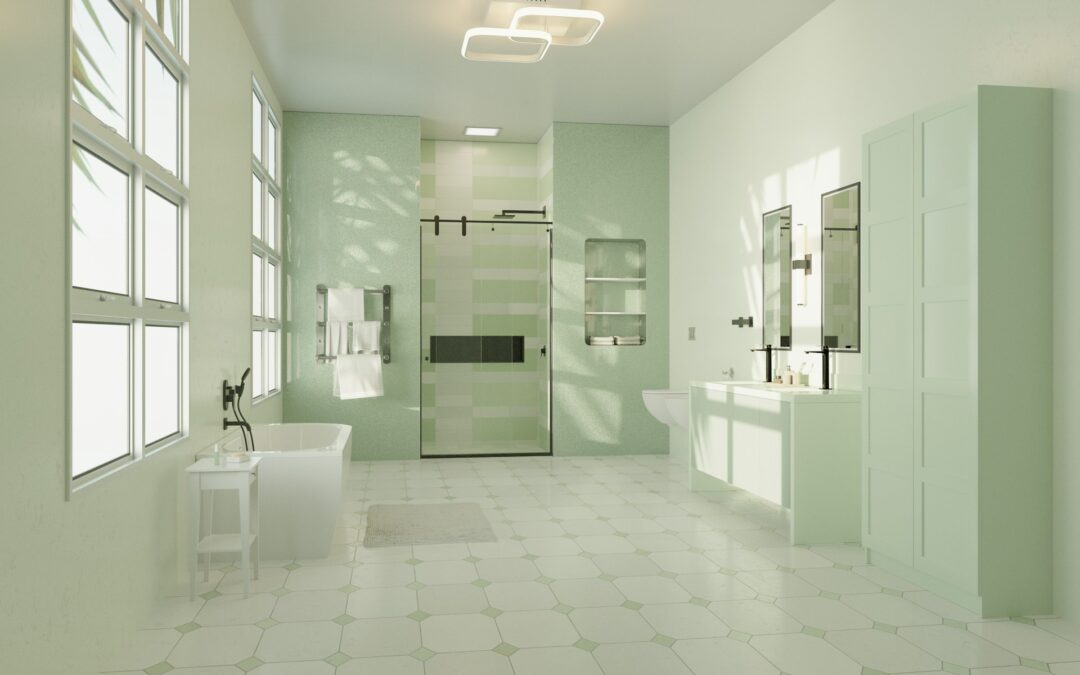
Green bathroom design can feel like a tug-of-war between eco-friendly choices and a bathroom that still looks polished and performs well every day.
At Ambiance Creations, we simplify the process with practical upgrades that reduce water and energy use without sacrificing comfort, durability, or style.
Inside, you will find reader-friendly guidance on healthier materials, efficient fixtures, and natural elements that make your space feel calm, current, and truly sustainable.
Foundations of Green Bathroom Design
Green bathroom design weaves environmental responsibility into practical style choices. It starts with picking materials that minimize harm to the planet and using resources more wisely across water, energy, and finishes.
What Makes a Bathroom Green
A green bathroom lowers its environmental impact through smart choices about water, energy, and materials. You can install low-flow toilets that use about 1.28 gallons per flush, while older models may use 3.5 gallons or more.
Water-efficient showerheads and faucets matter too. They can keep the flow at 2.0 gallons per minute or less while still delivering satisfying pressure with the right specifications and aeration.
LED lighting uses less energy than older bulbs and typically lasts much longer. The materials you pick matter as well, especially when you consider how products are made and how far they travel before they reach you.
Recycled glass tiles, reclaimed wood, and natural stone can look beautiful without draining new resources. In green bathroom design, the goal is to balance aesthetics with smarter sourcing and long-term durability.
Principles of Sustainable Design
Sustainable design prioritizes durability, efficiency, and health. You want fixtures and finishes that last for years, not items you need to replace every couple of seasons.
Natural ventilation and daylight can cut your need for fans and artificial lights. A well-placed window or skylight can transform the room’s feel while supporting energy savings.
Products with low or zero VOCs help keep indoor air cleaner. Water conservation also works best as a system rather than one-off upgrades.
Greywater setups can reuse sink water for flushing toilets. Insulating your pipes helps keep hot water hot, reduces energy loss, and improves comfort.
Eco-Friendly Materials Overview
Bamboo grows quickly and regrows, making it a strong option for flooring, cabinetry, and accessories. It can handle moisture better than many woods when properly sealed and maintained.
Recycled materials are widely available now, including glass tiles made from bottles, countertops made from reclaimed paper or plastic, and metal fixtures made with repurposed sources. These choices support green bathroom design by reducing landfill waste and lowering demand for new raw materials.
Natural stone like slate, marble, and granite can last for decades with proper sealing. Cork flooring feels softer underfoot and can be harvested without killing the tree since bark regrows.
Low-impact ceramics and porcelain made with recycled content also work well for tile and bathroom surfaces. Look for reputable certifications, such as Cradle to Cradle or GREENGUARD, to help verify product claims.
Eco-Conscious Materials and Finishes
Your surface and fixture choices shape both the look and the environmental footprint of your space. Natural, recycled, and low-toxicity options support green bathroom design while creating a healthier room for everyone.
Sustainable Flooring Options
Bamboo is a renewable flooring standout. It can reach maturity in three to five years, while hardwood trees may take decades.
When sealed properly, bamboo can stand up to bathroom humidity and day-to-day use. Cork is another smart move with strong comfort benefits.
Cork comes from cork oak bark, which grows back after harvest, so the tree remains healthy. It also naturally resists mold and mildew and feels warm underfoot.
Reclaimed wood adds character and keeps usable lumber out of dumps. Salvaged boards from older structures can look incredible, but they need careful treatment and sealing for wet areas.
Recycled tile made from glass, porcelain, or ceramic scraps is durable and helps keep waste out of landfills. With today’s options, you can choose from modern to classic looks without sacrificing style.
Recycled and Upcycled Fixtures
You can find sinks, faucets, and hardware made from recycled brass, copper, or stainless steel. These metals can be melted and reformed while maintaining strength and longevity.
Some manufacturers use high recycled content in their fixtures. Another creative approach is repurposed furniture for a vanity.
Turn an old dresser or table into a bathroom vanity with a few adjustments. Waterproofing and precise plumbing cutouts are essential, but the result can be truly one-of-a-kind.
Recycled glass countertops blend crushed glass with concrete or resin binders. They are non-porous, stain-resistant, and available in a wide range of color combinations with depth that is hard to replicate.
Low-VOC Paints and Sealants
Traditional paints can release VOCs into your air for months. These chemicals may contribute to headaches, dizziness, and breathing irritation, especially in small enclosed spaces.
Low-VOC and zero-VOC paints reduce emissions while still offering strong coverage and durability. Water-based sealants can perform well in bathrooms without the harsh fumes common in solvent-based products.
They help protect wood and grout from moisture while supporting cleaner indoor air. Natural oil-based sealants like linseed or tung oil are another low-toxicity option, though they may take longer to dry.
Look for Green Seal or GREENGUARD certified products. Those labels indicate the products have been tested for lower chemical emissions, which supports a healthier green bathroom design.
Water Conservation Strategies
Bathrooms can account for a meaningful share of indoor water use, making them a prime place to improve efficiency. Smart fixtures, alternative water systems, and rainwater collection can reduce consumption while improving day-to-day performance.
Low-Flow Fixtures
Low-flow faucets, showerheads, and toilets can perform well while using less water. Modern low-flow showerheads may use 2.0 gallons per minute or less, while older models can use far more.
That difference can add up quickly for a household. WaterSense-labeled toilets are another strong upgrade for green bathroom design. They use 1.28 gallons per flush instead of the older standards. Dual-flush toilets add flexibility with separate flush options for liquid and solid waste.
Low-flow faucets with aerators mix air into the stream, helping maintain comfort while reducing flow. In many homes, you will feel the same usability with a noticeable difference in the water bill.
Greywater Systems
Greywater systems capture used water from your shower, tub, and bathroom sinks for reuse. This lightly used water can be routed to flush toilets or support outdoor irrigation where codes allow.
With the right setup, you can recycle a significant portion of household water. Costs range widely, from simpler DIY approaches to more advanced systems with filtration and pumps.
Always check local codes before planning a greywater system. These systems use separate piping and may rely on gravity or a small pump, depending on the home’s layout.
Choose biodegradable, plant-safe soaps to keep reused water more compatible with irrigation. Thoughtful product selection is part of green bathroom design at the daily-use level.
Rainwater Harvesting
Rainwater collection systems capture roof runoff and store it for non-potable uses. A typical setup includes gutters, filters, a storage tank, and a pump.
Collected water can be used for flushing toilets, which can represent a sizable share of indoor water use. Storage ranges from compact barrels to large cisterns, depending on space, rainfall, and goals.
A 1,000-square-foot roof can collect a substantial amount of water from a single inch of rain. First-flush diverters help route away the initial runoff that tends to carry more debris.
UV filters or chlorination systems can improve water quality for fixtures. Rainwater is not drinkable without advanced treatment, but it can be a strong support for green bathroom design, where permitted.
Energy Efficiency in Bathroom Spaces
Cutting energy use in your bathroom can reduce monthly bills and support broader sustainability goals. Smart lighting, water heating, and ventilation choices can make a noticeable difference.
Energy-Saving Lighting Solutions
LED bulbs use significantly less energy than traditional incandescent bulbs and generally last much longer. Swapping older bulbs for LEDs is one of the simplest upgrades for green bathroom design.
They also perform well in humidity and turn on instantly. Dimmer switches let you control brightness for different times of day and different tasks.
Motion sensors are another practical choice, especially in powder rooms. They help ensure lights turn off when the room is not in use. Natural light can reduce the need for daytime lighting. If your layout allows, consider a skylight or larger window to bring in more daylight.
Frosted or textured glass can protect privacy while still letting the sun through. It is a high-impact, comfort-forward improvement that supports energy goals.
Efficient Water Heating
Tankless water heaters provide warm water on demand instead of keeping a large tank heated all day. This reduces standby energy loss and can provide consistent hot water with proper sizing.
Lowering your water heater temperature to 120°F can help prevent burns and reduce energy use. Many households find that comfort remains the same while efficiency improves.
Insulating hot water pipes reduces heat loss as water travels to the bathroom. Hot water arrives faster and stays warmer, improving comfort and reducing waste.
Insulation and Ventilation
Good insulation helps keep bathrooms comfortable without pushing heating and cooling systems harder than necessary. Check walls, ceilings, and floors for gaps or thin spots.
Spray foam or fiberglass can reduce drafts and limit energy loss. Energy-efficient exhaust fans manage moisture with lower power use than older models.
Look for fans with the ENERGY STAR label to support strong airflow and reduced energy use. Timer switches prevent fans from running longer than needed.
Seal gaps around windows, doors, and pipe penetrations with weatherstripping or caulk. Small leaks can cause HVAC systems to work harder over time, so these details matter.
Incorporating Nature and Biophilic Elements
Natural elements can make a bathroom feel calmer and more restorative. Plants can support air quality, and natural light can reduce the need for artificial lighting.
Indoor Plants and Green Walls
Plants are an easy way to add life to your bathroom. They can improve the atmosphere and bring a sense of nature into daily routines, which pairs beautifully with green bathroom design.
Choose varieties that handle humidity well, like pothos, spider plants, ferns, and orchids. Small pots can sit on shelves, counters, or windowsills.
If counter space is tight, use hanging planters. Green walls take it further by turning vertical space into a living feature. Vertical gardens can become a focal point. You can use a living wall system with irrigation or arrange mounted planters into simple patterns.
Best bathroom plants:
- Snake plants (tolerate low light)
- Boston ferns (thrive in humidity)
- Peace lilies (popular air-filter choice)
- Aloe vera (prefers bright, indirect light)
If you are new to indoor plants, start with one or two. Add more as you learn what performs best in your specific light and ventilation conditions.
Natural Lighting Techniques
Natural light can transform a bathroom during the day. It can help keep surfaces drier, support mold prevention, and make the room feel more open.
Skylights bring in sunlight from above while maintaining privacy. They can be especially helpful in bathrooms with limited wall space for windows. Tubular skylights can work well for smaller rooms. Larger windows can flood the space with daylight, but placement and privacy details matter.
Frosted or textured glass, or windows placed higher on the wall, can maintain privacy while letting in light. Glass block windows can also balance light and privacy in a clean, timeless way.
If structural changes are not possible, use mirrors to reflect existing light. Position mirrors across from windows or primary light sources to amplify brightness.
Personalization and Green Lifestyle Choices
Your daily habits and product choices matter just as much as major upgrades. Thoughtful cleaning and storage decisions can reduce waste and keep your bathroom healthier and more organized.
Non-Toxic Cleaning Products
Switching to non-toxic cleaners supports both health and environmental goals. Traditional cleaners may contain harsh chemicals such as ammonia, bleach, and phosphates.
Look for cleaners with plant-based ingredients like vinegar, baking soda, and citrus oils. These options can handle soap scum and grime effectively when used consistently.
You can also make simple cleaners at home with common household ingredients. This can reduce packaging waste and help you control what goes into your indoor air.
Why go non-toxic:
- Safer for kids and pets
- Better indoor air quality
- Biodegradable formulas that reduce waterway impacts
- Recyclable or refillable packaging options
Check for certifications such as EPA Safer Choice or Green Seal. These labels indicate products meet established environmental and safety criteria.
Sustainable Storage Solutions
Smart storage reduces clutter and supports a greener lifestyle. Choose storage made from bamboo, reclaimed wood, or recycled materials rather than plastic whenever possible.
Open shelves paired with baskets made from seagrass or jute add warmth and use renewable materials. Wall-mounted organizers can free floor space and make cleaning easier.
Glass jars or stainless steel containers are excellent for cotton balls, swabs, and other essentials. They last for years and reduce disposable packaging.
Repurpose older furniture pieces like vintage ladders or wooden crates as towel racks or storage units. It adds personality and keeps useful items from ending up in a landfill.
Designing a Bathroom That Feels Good and Does Better
Green bathroom design does not require sacrificing style, comfort, or performance. The right materials and fixtures can reduce waste while still delivering a space that feels refined and easy to live with.
By focusing on durability, efficiency, and healthier finishes, you avoid constant replacements and ongoing maintenance frustrations. Thoughtful choices now create long-term value and daily peace of mind.
When you are ready to turn ideas into a well-executed plan, Ambiance Creations can help guide the process with clarity and care. Get in Touch!
Frequently Asked Questions
What is green bathroom design?
Green bathroom design focuses on reducing environmental impact while maintaining comfort, durability, and visual appeal. It emphasizes efficient water use, energy-saving lighting, low-toxicity materials, and long-lasting finishes.
Do I need a full remodel to create a green bathroom?
No. Many homeowners start with small upgrades like low-flow fixtures, LED lighting, or low-VOC paint. These changes improve sustainability without disrupting the entire space.
Which materials work best for an eco-friendly bathroom?
Popular options include bamboo, cork, recycled glass tile, reclaimed wood, and porcelain or ceramic tile with recycled content. These materials balance performance with responsible sourcing.
Are low-flow fixtures less comfortable to use?
Modern low-flow fixtures are designed to maintain strong water pressure while using less water. Most people do not notice a difference in daily use, only reduced water consumption.
How can I improve bathroom air quality?
Choose low- or zero-VOC paints and sealants, ensure proper ventilation, and use exhaust fans rated for energy efficiency. Adding plants that tolerate humidity can also support a healthier environment.
Is natural light important in green bathroom design?
Yes. Natural light reduces the need for artificial lighting, helps control moisture, and makes the space feel larger and more inviting. Skylights, frosted windows, and reflective surfaces all help.
Can green bathroom design still look luxurious?
Absolutely. Sustainable materials like natural stone, recycled glass, and high-quality fixtures can feel just as refined as traditional options when thoughtfully selected and installed.
What is the best place to start if I feel overwhelmed?
Start with one priority, such as water efficiency or healthier finishes. Building your green bathroom design in stages makes the process more manageable and ensures each choice adds lasting value.