
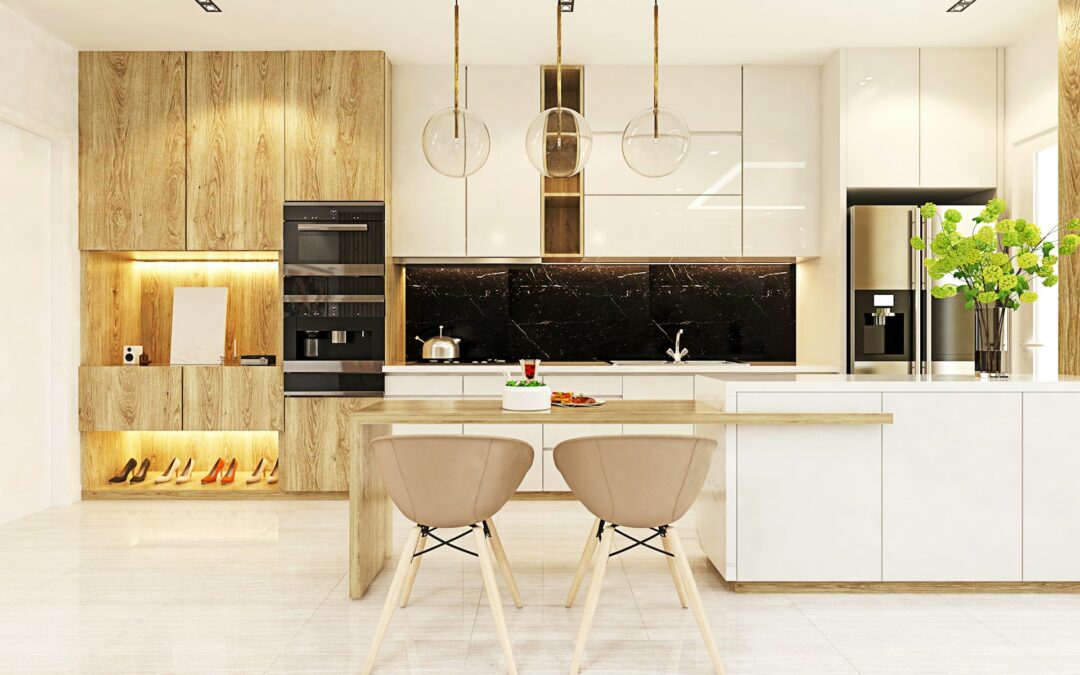
Your kitchen countertops do more than hold your coffee maker and cutting board. They define how your space looks and how well it functions for cooking and entertaining. A thoughtful kitchen countertop renovation can dramatically elevate both style and performance.
At Ambiance Creations, we believe every surface should reflect quality, integrity, and lasting craftsmanship. Whether you are making a modest investment or selecting premium materials, the right plan removes uncertainty and delivers a result that feels uniquely yours.
From natural stone to engineered surfaces, this guide explores materials, planning strategies, current design directions, and long-term care. Read on to make informed decisions that align beauty with everyday practicality.
Types of Kitchen Countertops
Kitchen countertops come in a wide range of materials, each offering distinct benefits and considerations. Your choice should reflect how you cook, entertain, and maintain your space.
Natural Stone Countertops
Natural stone brings timeless beauty and enduring value to a kitchen countertop renovation. Granite remains a leading choice thanks to its resistance to heat and scratches.
Each slab features unique movement and coloration, ensuring no two installations are identical. Marble delivers classic elegance with striking veining, though it is softer and more prone to scratching and staining.
Soapstone offers a smooth, matte finish that deepens over time. It resists heat well and does not stain easily, though minor scratches may occur and can be sanded out.
Quartzite combines the look of marble with enhanced durability. Harder than granite and resistant to etching, it requires less maintenance while offering a refined aesthetic.
Engineered Materials
Quartz countertops blend natural quartz with resin to create a non-porous, low-maintenance surface. They resist staining and do not require sealing, making them ideal for busy kitchens.
Available in a wide array of colors and patterns, quartz maintains a consistent appearance throughout the slab. While durable, it should be protected from direct heat with trivets or pads.
Solid surface materials allow seamless installations and integrated sinks. Scratches and minor burns can be sanded out, though these surfaces are less heat-resistant than natural stone.
Laminate Options
Laminate countertops provide an accessible entry point for a kitchen countertop renovation. Modern laminates convincingly replicate stone, wood, or concrete finishes.
Constructed from bonded layers over particleboard or plywood, laminate is relatively simple to install. It resists stains and does not require sealing.
However, it can be damaged by sharp knives or high heat, and seams are often more visible. Moisture intrusion at edges or seams may cause swelling over time.
Butcher Block Surfaces
Wood countertops introduce warmth and organic character. Maple, oak, walnut, and cherry are popular selections.
Regular oiling helps prevent drying and cracking. Scratches and stains can be sanded out, allowing the surface to be refreshed for years.
While beautiful and functional as a prep surface, wood must be protected from excess moisture and heat. Many homeowners incorporate butcher block selectively to balance performance and visual interest.
Planning Your Kitchen Countertops Renovation
A successful kitchen countertop renovation begins with clear planning. Establish your investment range, evaluate materials realistically, and confirm your kitchen’s structural readiness.
Establishing Your Investment
Material costs are only part of the equation. Installation, removal of existing countertops, plumbing adjustments, and possible cabinet repairs all influence the total cost.
Most projects range from $2,000 to $8,000, depending on size and material. Labor commonly falls between $30 and $100 per hour. Set aside an additional 10–20 percent for unforeseen conditions, such as water damage beneath existing surfaces.
Key cost considerations include:
- Material price per square foot
- Removal and disposal fees
- Edge treatments and finishes
- Backsplash installation
- Sink and faucet reinstallation
Choosing the Right Materials
Material selection shapes both daily use and long-term satisfaction. Granite and quartz are valued for durability and resilience.
Laminate offers versatility at a lower cost but is more susceptible to surface damage. Butcher block provides warmth yet requires consistent maintenance.
Consider your cooking habits, tolerance for upkeep, and desired aesthetic. Evaluate scratch resistance, stain resistance, heat tolerance, and maintenance requirements before finalizing your choice.
Assessing Layout and Space
Accurate measurements are essential. Standard countertops measure 24–25 inches deep and 36 inches high, while islands often include a 12–15 inch overhang.
Heavier materials, such as granite, may require reinforcement of the cabinets. Identify unusual wall angles or appliance placements that require custom fabrication. Precise planning ensures your kitchen countertop renovation proceeds without costly adjustments.
Design Trends for Kitchen Countertops
Current design directions blend bold expression with refined practicality. Today’s trends emphasize statement surfaces, natural movement, and cohesive detailing.
Popular Colors and Finishes
Light countertops remain timeless, yet darker hues such as charcoal, navy, and black are gaining popularity. Two-tone combinations create dimension and contrast.
Dramatic veining patterns inspired by marble add movement and artistry. Matte and honed finishes compete with polished surfaces, offering a softer, more understated appeal. Warm earth tones such as beige and terracotta complement wood cabinetry and mixed-metal fixtures.
Edge Profiles and Styling
Edge profiles subtly influence overall style, while straight edges provide a clean, modern look. Beveled edges introduce dimension, and ogee profiles complement traditional spaces.
Waterfall edges extend material vertically along islands for a seamless effect. Mitered edges create the illusion of thicker slabs without additional weight, enhancing visual impact.
Integrating Backsplashes
Extending countertop material into a full-height backsplash creates a cohesive design. This approach protects walls and establishes a strong focal point.
Contrasting backsplashes offer layered interest. Integrated backsplashes, formed from the same material, simplify cleaning and reduce visible seams.
Installation and Renovation Process
Understanding the renovation sequence prepares you for a smooth experience. Proper preparation, skilled execution, and realistic timelines are essential.
Preparing for Renovation
Clear cabinets and countertops before work begins. Protect appliances and disconnect plumbing as needed. Establish a temporary kitchen space for essentials during installation. Preparation minimizes disruption and safeguards belongings.
Hiring Professionals vs. DIY
Professional installation ensures precise measurements, accurate fabrication, and warranty-backed workmanship. DIY projects are more feasible with lightweight materials such as laminate. Heavy materials like granite and quartz require specialized tools and handling expertise.
Timeline and Project Phases
Most projects follow three stages:
Phase 1: Measurement (1–2 hours)
Phase 2: Fabrication (1–2 weeks)
Phase 3: Installation (4–8 hours)
Complex layouts or custom detailing may slightly extend timelines.
Care and Maintenance Tips
Proper maintenance preserves the beauty of your kitchen countertops for years.
Cleaning Best Practices
Use mild dish soap and warm water for daily cleaning. Avoid abrasive or harsh chemical cleaners. Natural stone benefits from pH-neutral cleaners. Wipe spills promptly, especially acidic liquids. Dry surfaces after cleaning to prevent water spots and maintain luster.
Preventing Damage
Always use cutting boards and trivets. Avoid dragging heavy items across surfaces. Keep sink areas dry to prevent moisture infiltration at seams.
Long-Term Upkeep
Seal natural stone surfaces annually or as recommended. Inspect caulk lines around sinks and backsplashes every six months. Professional polishing can restore minor surface wear. Retain the warranty documentation and follow the manufacturer’s care guidelines to preserve coverage.
Elevate Your Kitchen with Confidence
A well-executed kitchen countertop renovation enhances both daily living and long-term value. Thoughtful material selection and expert installation ensure performance that matches aesthetic appeal.
At Ambiance Creations, we approach each renovation with craftsmanship, precision, and a commitment to tailored design. Every detail is considered to create surfaces that feel both refined and enduring.
Ready to transform your space? Get in touch to begin planning your next kitchen upgrade with clarity and confidence.
Frequently Asked Questions
How long does a kitchen countertop renovation typically take?
Most projects follow three primary phases: measurement, fabrication, and installation. After measurements are finalized, fabrication generally takes one to two weeks, depending on material availability and customization.
Installation often takes a single day, though more complex layouts or specialty edge details may require additional time. Planning ahead helps ensure a smooth and predictable schedule.
What is the most durable material for kitchen countertops?
Quartz and granite are widely regarded as highly durable options. Both resist scratches and daily wear, making them well-suited for active kitchens.
Quartz offers the added benefit of a non-porous surface that resists staining without sealing. Granite provides excellent heat resistance but requires periodic sealing to maintain performance.
Do natural stone countertops require sealing?
Yes, most natural stone surfaces, such as granite and marble, require sealing to protect against moisture and staining. The frequency depends on the specific stone and level of use. A simple water test can indicate when resealing is needed. If water absorbs into the surface rather than beading, it is time to reseal.
Can I replace countertops without replacing cabinets?
In many cases, yes. Existing cabinets can often support new countertops if they are structurally sound and level. Heavier materials like granite or quartz may require reinforcement. A professional evaluation ensures your cabinetry can properly support the new surface.
Are waterfall edges worth considering?
Waterfall edges create a continuous flow of material from the countertop down the side of an island or cabinet. This design delivers a striking, modern aesthetic. Beyond visual impact, waterfall edges also protect cabinetry from scuffs and daily wear in high-traffic areas.
How do I maintain my new countertops long-term?
Routine cleaning with mild soap and water is typically sufficient. Avoid abrasive cleaners and always use cutting boards and trivets to prevent damage.
Natural stone should be sealed as recommended, and caulk lines should be inspected periodically to prevent moisture issues. Proper care preserves both appearance and longevity.