
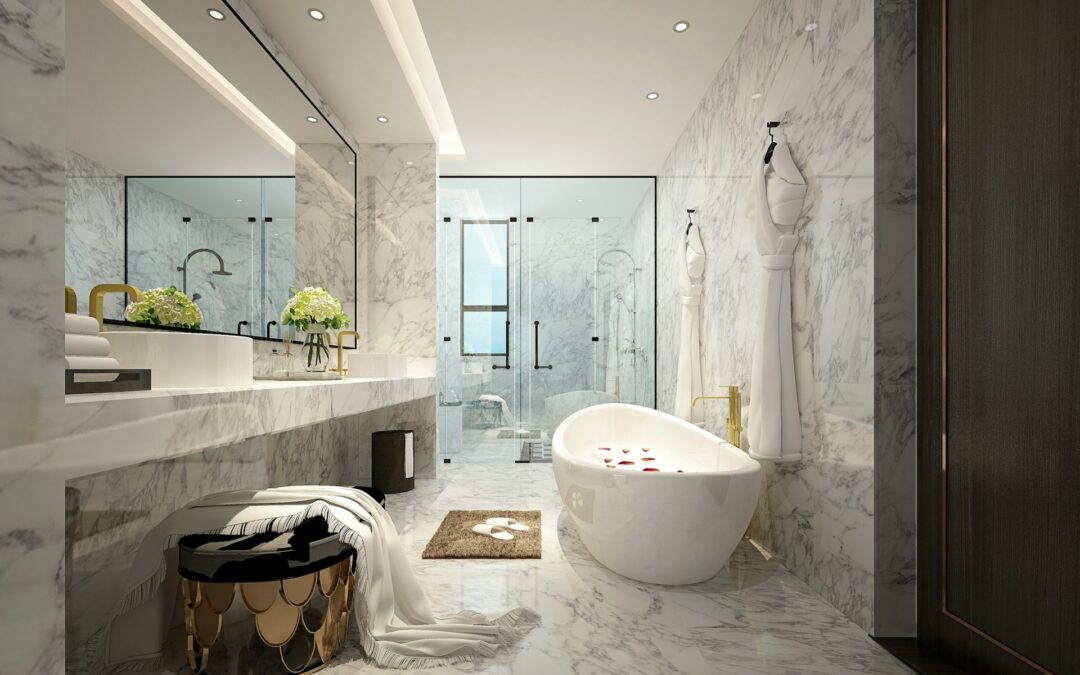
Marble is stunning, but a marble bathroom renovation can feel risky when you’re worried about stains, etching, and slippery surfaces. Ambiance Creations helps you avoid costly missteps with smart material choices and proven installation details.
In the next sections, you’ll learn how to pick the right marble and finish, plan the layout for daily use, and seal it correctly. You’ll also get practical design ideas that stay timeless without feeling overdone.
If you want a bathroom that looks refined today and holds up for years, this guide will walk you through the essentials.
Planning Your Marble Bathroom Renovation
A successful marble bathroom renovation takes real financial planning, a clear vision, and the right professionals. You’ll balance your design goals with practical factors like material costs, installation requirements, and ongoing maintenance.
Setting a Budget
Marble usually costs between $40 and $180 per square foot for standard options. If you’re eyeing premium styles like Calacatta or Statuario, expect to pay over $200 per square foot.
Make sure your investment covers materials, labor, plumbing fixtures, and a 15–20% buffer for inevitable surprises. Installation costs vary depending on the scope and level of detail.
Swapping out a vanity top might run $1,500 to $3,000. A full marble makeover, including floors, walls, and countertops, can easily hit $15,000 to $50,000 or more.
To control costs without losing impact, consider these strategies:
- Use marble as an accent, not everywhere
- Mix marble with ceramic or porcelain in secondary areas
- Choose marble-look alternatives in high-traffic zones
- Highlight marble in focal points like the vanity or a shower feature wall
Don’t forget sealing. Marble often needs professional sealing every 6–12 months, typically $150 to $300 per visit.
Design Inspirations
White marble with soft gray veining remains the classic choice for a clean, timeless look. Pair it with chrome or brushed nickel for a traditional feel, or use matte black hardware for crisp contrast.
Veining changes the mood. Dramatic veining reads bold and works well as a tub backdrop or feature wall. Subtle veining feels calm and pairs nicely with minimalist details.
Marble suits nearly any style. Traditional bathrooms shine with honed Carrara and ornate fixtures. Contemporary spaces lean into polished slabs and geometric layouts. For a stronger statement, colored marble in green, black, or cream can add personality.
Tile size matters. Large slabs reduce grout lines for a seamless look. Smaller tiles or mosaics add texture, especially in shower niches or floor borders.
Working With Professionals
Choose a contractor experienced with natural stone. Marble needs specialized tools, careful prep, and precise sealing, which differs from standard tile work.
Ask potential contractors:
- How many marble bathrooms have you completed?
- Can you share references from recent projects?
- Which sealing products do you use, and why?
- How do you handle tricky cuts and layout alignment?
Request detailed, written estimates with a breakdown of materials, labor, and timelines. Most marble installations take 2–4 weeks, depending on bathroom size and design complexity. Coordinate sealing timing. The stone typically needs to sit 24–48 hours after installation before the first seal.
Choosing the Right Marble for Your Bathroom
Selecting marble shapes both the look and the lifespan of your space. The stone type, finish, and pattern you choose will affect maintenance needs and the overall design direction.
Types of Marble
Carrara marble, straight from Italy, has soft white backgrounds with gentle gray veining. It’s often more accessible and works well in many bathroom styles.
Calacatta marble features bolder veining and a brighter white background than Carrara. It’s pricier, but it creates a strong focal point, with veins that can run gold or deep gray.
Statuario marble is among the whitest options, marked by dramatic gray veining. It’s typically used for statement applications like shower walls or vanity tops.
Crema Marfil offers beige and cream tones that can disguise water spots and soap scum better than bright white marbles. This Spanish stone adds warmth to bathrooms.
Emperador marble appears in deep brown with lighter veining. It can hide stains and watermarks well and creates contrast against lighter finishes.
Pros and Cons of Different Marble Finishes
A polished finish delivers a glossy, reflective surface where color and veining pop. It works well on walls and countertops, but it can get slippery when wet and may show scratches more easily.
A honed finish is smooth and matte with minimal shine. It’s often better for floors and showers because it has more traction and hides water spots and etching more effectively.
A tumbled finish has a more aged, textured look with rounded edges. It offers strong traction for floors and helps disguise wear over time.
Polished typically needs sealing more often than honed or tumbled marble. Honed is commonly sealed every 6–12 months, and polished every 3–6 months. Tumbled also needs sealing, though the texture can help mask minor changes.
Selecting Marble Colors and Patterns
Light marbles can make smaller bathrooms feel larger and brighter. White and cream reflect light and work across design styles.
Veining can be subtle or bold. Thin veins create a calm, understated look. Large, dramatic veins become the visual centerpiece and add character to simpler spaces.
Consider these factors when choosing patterns:
- Room size: busy patterns can overwhelm a small bathroom
- Lighting: natural light brings out veining detail
- Surrounding materials: marble should complement tile, fixtures, and cabinetry
- Personal style: classic looks favor subtle veining; modern designs often go bold
Match the stone to your hardware and finishes. Cool gray veining works with chrome and silver. Warm gold or beige veining pairs well with brass or bronze.
Book-matched slabs, where two pieces mirror each other, are striking on large shower walls or behind vanities. Random patterns are simpler to install and often cost less.
Key Steps in the Renovation Process
A marble bathroom renovation depends on careful sequencing. Each phase builds on the last, from preparation to sealing that protects the stone for years.
Preparation and Demolition
Protect any existing marble before demolition. Cover countertops, floors, and walls with thick padding and plastic to prevent chips and scratches. Shut off the water and disconnect plumbing fixtures. Remove old fixtures, cabinets, and tile in sections to reduce dust and damage.
Create a clear path for workers to move materials in and out. This keeps new marble pieces safer during staging.
Inspect the subfloor and wall structure for water damage or weak areas. Marble needs a flat, stable surface, because movement later can crack the stone. Fix issues now, not after installation.
Store new marble slabs in a climate-controlled area away from active work. Temperature swings and humidity can affect stone before installation.
Proper Installation Techniques
Use professional-grade thin-set mortar rated for natural stone. Regular mortar can stain lighter marbles, so choose white or non-staining products.
Spread mortar in small sections with a notched trowel at a 45-degree angle. This helps create even ridges and reduces air pockets beneath the stone. Press each piece firmly and use spacers to keep grout lines consistent.
For larger tiles or slabs, back-butter with a thin mortar layer on the surface of the stone. This improves coverage and helps prevent voids that can lead to cracking.
Check the level continuously. Small differences become obvious once complete, and repairs are difficult after curing. Allow mortar to cure for at least 24–48 hours before grouting. Rushing can cause tile shift and future grout cracking.
Sealing and Protecting Marble Surfaces
Seal marble before and after grouting to reduce staining. Use a penetrating sealer designed for marble, applied in thin, even coats with a clean cloth or foam applicator.
Wait 15–20 minutes, then wipe away any sealer that remains on the surface. Leaving residue can cause a hazy film that dulls the finish. Apply a second coat about 24 hours after the first. Many marble installations need resealing every 6–12 months, depending on water exposure.
Test your seal by placing a few drops of water on the surface. If it beads, protection is active. If it darkens or absorbs, it’s time to reseal. Use only pH-neutral cleaners. Acidic or alkaline products degrade the sealer and can etch the stone, creating dull spots that may require professional refinishing.
Marble Bathroom Design Ideas
Marble supports a wide range of styles, from crisp modern looks with bold veining to soft, traditional spaces built for comfort. Your selection of stone type, color, and placement sets the tone.
Modern Marble Bathroom Styles
Modern marble bathrooms combine natural stone with clean lines and sleek fixtures. Marble with bold gray or black veining on white backgrounds creates high contrast and strong visual structure, especially as a tub backdrop or large-format floor tile.
Frameless glass showers keep the room open and let the marble take center stage. Book-matched slabs create a striking feature wall when the veining mirrors across panels.
Matte black or brushed nickel fixtures work well with cool-toned marble. Floating vanities with marble tops reinforce the modern feel and can make the room appear larger. Recessed lighting keeps lines clean while highlighting the stone’s movement.
Classic Marble Bathroom Looks
White marble anchors traditional bathroom design. Carrara, with soft gray veining, creates a spa-like calm that supports daily routines and relaxation. Use subway tile for timeless structure or larger slabs for a richer, more dramatic feel.
Traditional layouts often include marble wainscoting with painted walls above. Undermount sinks, marble counters, and detailed cabinetry complete the look. Brass or polished chrome fixtures add warmth and refinement.
Try marble floors in herringbone or basketweave patterns for texture without losing sophistication. Pair them with white or cream shaker-style cabinetry for a space that feels elegant and welcoming.
Incorporating Marble in Small Bathrooms
Small bathrooms benefit from marble’s light-reflecting surface. Stick to lighter marbles to keep the space airy, then add a single focal point like a vanity wall to create depth without visual clutter.
Mix marble countertops with simple, light tile elsewhere to prevent the room from feeling busy. A marble shower niche adds function while reinforcing the overall finish.
Vertical marble panels can make ceilings feel higher. Subtle veining often works best, because oversized patterns can make tight spaces feel crowded.
Long-Term Care and Maintenance of Marble Bathrooms
Marble performs best with consistent upkeep. The right cleaners, quick spill response, and routine sealing help preserve your finish and prevent long-term damage.
Daily Cleaning Tips
Use pH-neutral cleaners designed for natural stone. Many everyday bathroom cleaners contain acids that can etch marble and dull the surface.
Wipe countertops, walls, and floors daily with warm water and a soft microfiber cloth. This removes soap residue, toothpaste, and product buildup before it stains.
Use for daily cleaning:
- pH-neutral stone cleaner
- Warm water
- Soft microfiber cloths
- Non-abrasive sponges
Avoid:
- Vinegar or lemon juice
- Bleach or ammonia-based cleaners
- Abrasive scrubbing pads
- Generic bathroom cleaners
Dry marble after cleaning to reduce water spots and mineral deposits. Pay extra attention around faucets and drains.
Preventing Stains and Damage
Address spills immediately. Blot with a soft cloth rather than wiping, which can spread the spill.
Marble contains calcium carbonate and reacts with acids. Hair products, perfumes, nail polish remover, and acidic cleaners can cause etching. Keep these products off marble, and use trays or mats to protect countertops.
Place coasters under bottles and soap dispensers to prevent ring marks. Use bath mats near tubs and showers to reduce prolonged water exposure.
Avoid dragging heavy or sharp objects across marble. Small scratches can stand out over time, and repairs often require a professional.
Periodic Resealing Advice
Plan to reseal every 6–12 months, depending on use and water exposure. Shower floors may need more frequent sealing than vanity areas.
To check sealing performance, drip water on the surface. If it beads, protection is strong. If it darkens or absorbs within a few minutes, resealing is due.
Professional resealing often delivers the most consistent result. Between professional visits, a maintenance sealer can help in high-use areas, as long as the surface is clean and dry and product instructions are followed.
A Marble Bathroom That Holds Up Over Time
A marble bathroom renovation should feel luxurious without becoming stressful to maintain. The right stone, finish, and sealing strategy make the difference between constant upkeep and lasting beauty.
When details are planned correctly, marble resists daily wear, cleans easily, and continues to elevate the space year after year. Thoughtful decisions early on help prevent staining, etching, and premature repairs.
Ambiance Creations guides homeowners through these choices with clarity and precision. Get in touch to create a marble bathroom that looks exceptional and performs just as well.