
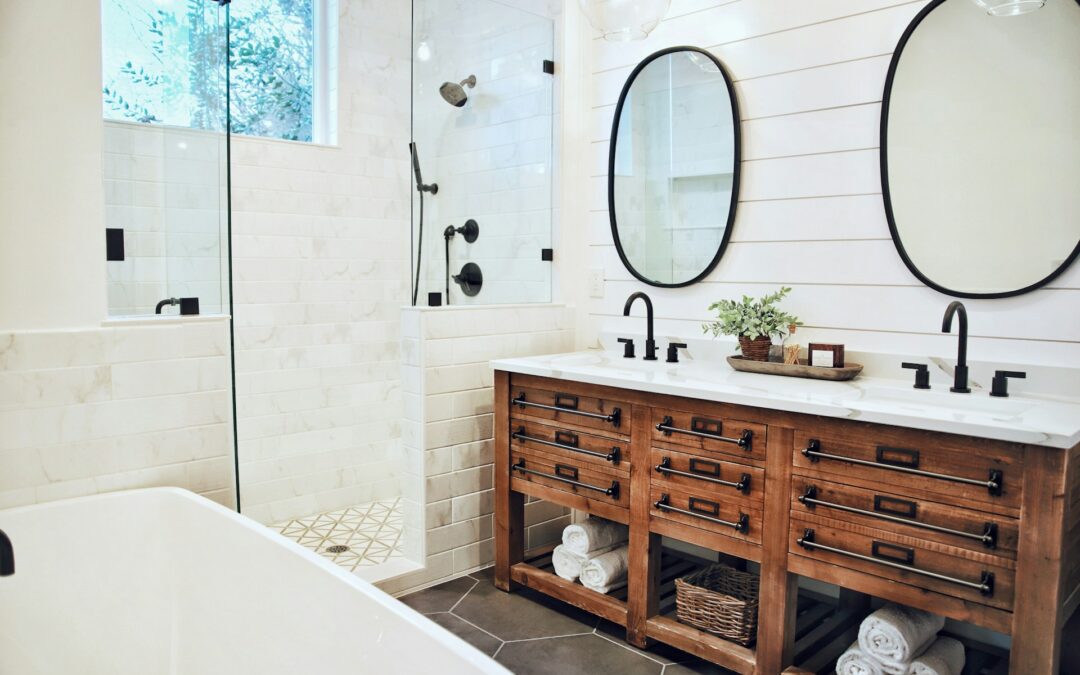
Your bathroom may be quietly driving up your water bills every day. Toilets, showers, and sinks often use more water than necessary, and those small losses add up fast.
The good news is that water-saving bathroom fixtures can significantly reduce water use without sacrificing comfort or performance. Modern options are designed to feel just as powerful while cutting waste at the source.
At Ambiance Creations, we help homeowners choose fixtures that balance efficiency, durability, and everyday usability. Below, you will learn which upgrades deliver real savings, how they work, and how to avoid common mistakes.
Types of Water-Saving Bathroom Fixtures
Modern water-saving bathroom fixtures can cut bathroom water use by 20% to 60% compared to older models. These upgrades help lower utility bills while easing strain on local water supplies.
Low-Flow Toilets
Low-flow toilets use 1.6 gallons per flush or less, while older toilets can use 3.5 to 7 gallons per flush. Replacing a toilet can save thousands of gallons of water every year.
These toilets use improved bowl and trap designs to move waste efficiently with less water. Many also include pressure-assisted flushing systems that boost performance. You likely will not notice a difference in how well they work.
Key benefits of low-flow toilets:
- Use 1.28 to 1.6 gallons per flush
- Save a family of four up to 16,000 gallons per year
- Reduce water bills by $90 or more annually
- Meet WaterSense certification standards
Expect to pay anywhere from $100 to $500, depending on the model. Most households see the investment pay off in two to three years through lower bills.
Water-Efficient Showerheads
Standard showerheads use 2.5 gallons per minute, but water-efficient models can get down to 2.0 or even 1.5 gallons per minute. You do not have to give up a satisfying shower.
These showerheads mix air with water to keep the pressure and spray feeling strong. You still get a good rinse while using far less water.
A family of four could save about 2,900 gallons per year with a 2.0 GPM showerhead. That can be around $70 per year in combined water and energy savings. Installation is usually quick, often just a few minutes with a wrench.
Dual-Flush Toilets
Dual-flush toilets offer two flush options: a lighter flush (0.8 to 1.1 gallons) for liquid waste, and a full flush (1.6 gallons) for solids.
You choose the right amount of water for the task. Since many bathroom visits only need the lighter flush, overall water use drops significantly. Studies report dual-flush toilets can save 67% more water than older models.
Households can save about 4,000 gallons a year with a dual-flush toilet. Prices typically start around $150 and can reach $600 for premium versions.
Faucet Aerators
Faucet aerators are small screens that screw onto the end of your faucet. They add air to the stream, so you get a strong flow while using less water, often cutting flow from 2.2 GPM to 1.5 GPM or less.
You can install one in under a minute, usually with no tools. At $3 to $10 each, they are among the simplest water-saving upgrades available. The water feels strong because of the added air.
Water savings with faucet aerators:
- Reduce flow by 30% or more
- Save up to 700 gallons per year per faucet
- Cut water-heating costs
- Cost less than $10 each
Look for WaterSense-labeled aerators that use 1.5 GPM or less. Each bathroom faucet you upgrade could save about $50 per year.
Benefits of Installing Water-Saving Fixtures
Upgrading to water-saving bathroom fixtures means more money in your pocket and less waste. These changes pay for themselves over time and can also help support resale appeal.
Reduced Water Bills
Water-saving fixtures cut monthly water bills by reducing water use for daily routines. A standard showerhead uses about 2.5 gallons per minute, while a low-flow model drops that to 2.0 or less. That difference adds up quickly with daily showers.
Toilets are often the biggest water users. Older toilets can use up to 7 gallons per flush, while dual-flush models use about 1.6 gallons for solids and 0.8 gallons for liquids. A family of four could save around 20,000 gallons of water each year by switching to low-flow toilets.
Most families save between $50 and $100 per year on water alone. If you heat your water, you may see lower energy bills as well.
Environmental Impact
Every gallon saved helps ease pressure on local water supplies. In many areas, shortages are a real concern, especially during the summer. Water-saving fixtures help stretch the available supply, which supports community resilience.
Treating and pumping water also takes energy. Using less water reduces energy demand at treatment plants and pumping stations, thereby lowering emissions.
Reducing the amount of water going down the drain can reduce the load on wastewater treatment plants. It is a practical way to help protect rivers, lakes, and coastal waters from pollution.
Enhanced Home Value
Modern buyers increasingly look for efficiency features. Water-saving bathroom fixtures signal that a home is updated, responsible, and easier to maintain.
Agents often highlight water-efficient features in listings. Upgraded fixtures can help a bathroom feel current, without adding renovation delays for the next owner. Even modest upgrades can deliver a strong return. Many homeowners recover much of the investment through lower bills before they ever sell.
How Water-Saving Fixtures Work
Water-saving bathroom fixtures reduce waste by controlling flow rates, optimizing spray patterns, and lowering flush volume. These designs maintain performance while using 20% to 60% less water than standard fixtures.
Flow Restriction Technology
Flow restrictors are small devices inside faucets and showerheads that limit how much water passes through each minute. Standard bathroom faucets may run at 2.2 GPM, but restrictors can bring that down to 1.5 GPM or less.
They work by narrowing the pathway inside the fixture, creating resistance that slows flow without forcing you to change your water pressure settings. You will find restrictors built in or available as aerator attachments for existing faucets.
WaterSense-labeled fixtures use certified flow restriction that meets EPA standards. You use less water each time you wash your hands or brush your teeth, with little effort.
Pressure and Spray Patterns
Water-saving fixtures use air injection and engineered spray patterns to make less water feel like more. Aerators mix air into the stream, which creates a fuller feel.
This aerated flow can feel strong even while using less water. Showerheads use designed spray patterns for better coverage. Instead of wide, wasteful streams, they rely on focused jets or pulsing sprays.
That supports a thorough rinse while staying at 2.0 GPM or less. Pressure stays consistent because the fixture balances water speed with volume. You still get effective cleaning and rinsing, just with less water.
Flush Volume Reduction
Low-flow toilets use about 1.28 gallons per flush instead of the 3.5 to 7 gallons many older models required. They achieve this with larger trapways, improved bowl design, and stronger flush valves.
Dual-flush toilets provide two buttons: one for liquids (0.8 to 1.0 gallons) and one for solids (1.6 gallons). You select what you need each time.
Pressure-assisted models use compressed air to add power to the flush. The air pushes water through the bowl faster than gravity alone. You get a clean flush while using far less water.
Choosing the Right Fixtures for Your Bathroom
Focus on certified products, durable materials, and compatibility with your layout and style. Smart selections make water-saving bathroom fixtures feel like a true upgrade, not a compromise.
Certifications and Labels to Look For
WaterSense is the main label to check for. Products with this EPA tag use at least 20% less water than standard models while still performing well. You will see WaterSense on faucets, showerheads, and toilets.
If you want stricter building-focused standards, look for LEED alignment. These fixtures can support green building requirements and may qualify for rebates in some areas.
The CALGreen standard is required in California, but it can signal strong efficiency anywhere. Certified products typically list max flow rates such as 1.2 GPM for faucets and 1.8 GPM for showerheads. Some local utilities offer rebates for certified fixtures, so check before you buy.
Materials and Durability
Solid brass and stainless steel fixtures often last the longest and resist corrosion. Brass with chrome or nickel plating offers a clean look and protects the base metal. Stainless steel is a strong fit for humid bathrooms because it resists rust.
Inside faucets, ceramic disc valves usually deliver smooth operation for years with minimal leaks. Plastic cartridges wear out faster, so consider skipping them when possible.
Material comparison for common fixtures:
| Material | Durability | Water Resistance | Maintenance |
| Solid Brass | Excellent | Excellent | Low |
| Stainless Steel | Excellent | Excellent | Very Low |
| Zinc Alloy | Good | Fair | Medium |
| Plastic | Fair | Good | High |
Style and Compatibility
Match your fixture finish to existing hardware like towel bars and cabinet pulls. Chrome, brushed nickel, and matte black remain popular and work well with water-saving technology. Check mounting requirements before buying. Wall-mounted faucets need different plumbing than deck-mounted versions.
Measure sink holes and spacing so everything fits cleanly. Single-handle faucets often reduce wasted water because you can dial in the temperature faster. Low-flow showerheads come in rain, handheld, and dual styles, so you have options.
Your home’s water pressure also matters. If pressure is low, look for fixtures designed for 30 to 40 PSI. Many standard fixtures perform best around 60 to 80 PSI.
Installation and Maintenance Tips
Correct installation helps water-saving bathroom fixtures deliver the savings you expect. Simple maintenance keeps performance consistent for years.
DIY Installation Steps
Most fixtures are easy to install with basic tools. You will typically need an adjustable wrench, pliers, Teflon tape, and a screwdriver.
For low-flow showerheads
- Unscrew your old showerhead by turning it counterclockwise with a wrench.
- Clean the shower arm threads with a cloth.
- Wrap Teflon tape around the threads 3 to 4 times clockwise.
- Screw the new showerhead on by hand, then tighten gently with a wrench.
For faucet aerators
Unscrew the old aerator from the faucet tip and screw the new one on by hand. No tools are usually needed.
For toilet flappers
Turn off the water supply valve behind the toilet. Flush to empty the tank. Unhook the old flapper from the chain and side pegs, attach the new one, and reconnect the chain. Leave about half an inch of slack.
Always check for leaks by running water and inspecting connections. If you see a drip, tighten slightly.
Professional Installation Advice
Some fixtures benefit from a pro. Dual-flush toilets and pressure-assist models can involve more complex tank parts. If you are replacing a full toilet, adding shut-off valves, or dealing with older, corroded pipes, consider calling a plumber. Older plumbing can fail unexpectedly and create larger issues.
Licensed plumbers help ensure installations meet local codes. Many also provide warranties for added peace of mind. Get quotes from at least three plumbers. Ask whether they have experience with water-efficient fixtures.
Some towns offer rebates if a pro installs WaterSense-certified products, so check local requirements before scheduling.
Ongoing Care for Optimal Performance
Clean fixtures monthly to prevent mineral buildup that can reduce flow. For showerheads and aerators, soak them in white vinegar for about 30 minutes to dissolve deposits.
Check toilet flappers twice a year. Add a bit of food coloring to the tank and wait 15 minutes without flushing. If you see color in the bowl, replace the flapper.
Regular maintenance checklist:
- Inspect aerators every few months and clear buildup.
- Test water pressure; 45 to 60 PSI is often ideal.
- Tighten loose connections before they become leaks.
- Replace worn washers and O-rings as soon as you notice dripping.
Low-flow fixtures can last five to ten years with normal care. Keep receipts and warranty information for parts and replacements.
Save Water Without Sacrificing Comfort
High water bills and outdated fixtures do not have to be permanent frustrations. The right water-saving bathroom fixtures reduce waste quietly, without changing how your bathroom feels or functions.
When efficiency is built into the design, savings happen every day with no extra effort. Over time, those small improvements add up to meaningful long-term value.
If you are ready to upgrade with confidence, Ambiance Creations can help you choose solutions that fit your home and your priorities. Get in touch!
Frequently Asked Questions
Do water-saving bathroom fixtures really lower monthly bills?
Yes. Water-saving bathroom fixtures reduce the amount of water used with every flush, shower, and handwash. Over a year, this can translate into noticeable reductions on both water and energy bills, especially in homes with multiple occupants.
Will low-flow fixtures affect water pressure or comfort?
Modern fixtures are designed to maintain comfort. Showerheads and faucets use air-injection and optimized spray patterns so water pressure feels strong, even while using less water.
Are water-saving fixtures suitable for older homes?
Most are. Faucet aerators and showerheads install easily on existing plumbing, and many toilets are designed to fit standard rough-ins. For very old plumbing, a professional check can help avoid compatibility issues.
How long do water-saving bathroom fixtures last?
With proper care, quality fixtures often last five to ten years or more. Choosing durable materials and keeping up with basic maintenance helps ensure consistent performance.
What certifications should I look for when buying fixtures?
Look for the WaterSense label. It indicates the fixture meets EPA standards for efficiency and performance, using at least 20 percent less water than standard models.
Can I upgrade gradually, or should everything be replaced at once?
Upgrading gradually works well. Many homeowners start with high-impact items like toilets or showerheads, then add faucet aerators or other fixtures over time.
Do water-saving fixtures require special maintenance?
No special care is required. Regular cleaning to prevent mineral buildup and occasional checks for leaks are usually enough to keep fixtures working efficiently.
Are water-saving bathroom fixtures a good long-term investment?
Yes. Beyond lower utility bills, these fixtures support sustainability goals and can make a bathroom feel more modern and appealing, which may benefit long-term home value.