
Finding the right custom cabinet contractor can be challenging. Many homeowners struggle with cabinets that don’t fit properly, limited storage, or materials that wear out too quickly.
At Ambiance Creations, we believe cabinetry should combine precision craftsmanship, functionality, and lasting design. Working with the right contractor ensures your cabinets are built specifically for your space, your storage needs, and your lifestyle.
This guide explains what a custom cabinet contractor does, how to choose the right professional, popular cabinet styles, and key investment factors so you can plan your kitchen remodel with confidence.
What Does a Custom Cabinet Contractor Do?
A custom cabinet contractor manages the entire cabinetry process—from the first design concept to the final installation. Their expertise ensures cabinets fit perfectly, function efficiently, and complement the overall design of the space.
Roles and Responsibilities
Your contractor acts as the primary point of contact throughout the project. Unlike general contractors who occasionally install cabinets, a custom cabinet contractor specializes specifically in cabinetry design and construction.
They coordinate designers, woodworkers, finish specialists, and installers to ensure the project runs smoothly. If any issues arise during installation, they resolve them quickly to keep the project moving.
They also manage permits, building code requirements, and precise measurements. Accuracy is critical, and experienced contractors carefully verify every dimension so cabinetry fits seamlessly within your space.
Customized Design Process
The process typically begins with a detailed consultation. Your custom cabinet contractor asks about your storage needs, cooking habits, and style preferences.
Next comes precise measurement of the room, including walls, floors, and ceilings. Even minor measurement errors can affect the entire installation, so careful planning is essential.
Contractors often analyze your daily routine to determine practical storage solutions. Deep drawers for cookware, pull-out shelves for accessibility, and appliance-specific storage all influence the design.
Many professionals now use 3D rendering software, allowing you to preview the cabinets before construction begins. This technology makes it easier to visualize the final layout and refine details before fabrication starts.
Material Selection and Sourcing
A custom cabinet contractor also guides you through wood species, finishes, and hardware selections. Popular options include maple, oak, cherry, and birch, each offering different durability, grain patterns, and aesthetics.
Contractors work with trusted suppliers to source high-quality materials that align with your design goals. This ensures consistency and reliability throughout the build process. Decorative elements such as crown molding, trim, door styles, and millwork details are finalized during this stage. Proper coordination of materials helps keep production and installation on schedule.
Benefits of Hiring a Custom Cabinet Contractor
Working with a custom cabinet contractor ensures cabinetry is designed specifically for your home’s layout and lifestyle. Their expertise in materials and craftsmanship significantly improves durability and overall design quality.
Custom cabinetry can also increase a home’s long-term value by providing functional storage and refined visual appeal.
Personalized Storage Solutions
A custom cabinet contractor designs storage solutions tailored to your room’s exact dimensions. Difficult corners, unique ceiling heights, and tight spaces can all be incorporated into the design.
Contractors carefully consider how you use your kitchen. Drawer depth for cookware, appliance storage, spice racks, and pull-out waste systems can all be customized.
You also control every design detail, including wood species, finish color, door style, hardware, and special features. Glass-front cabinets, soft-close drawers, and built-in organizers can all be integrated.
Custom cabinetry is not limited to kitchens. These solutions are commonly used in bathrooms, home offices, laundry rooms, and entertainment centers.
Quality Craftsmanship
Experienced cabinet professionals understand how to build cabinetry that lasts for decades. They select durable materials and proven joinery techniques that outperform mass-produced alternatives.
Each cabinet component is carefully cut, assembled, and finished. Attention to detail during fabrication ensures smooth drawer operation, properly aligned doors, and seamless joints.
High-quality materials such as solid hardwood frames, premium plywood panels, and durable hardware systems improve longevity and performance.
Experienced contractors also understand how wood responds to changes in temperature and humidity. Proper construction methods prevent problems like warping, cracking, or door misalignment.
Increased Home Value
Custom cabinetry is widely considered a valuable home improvement investment. Buyers often recognize the difference between stock cabinetry and well-crafted custom work.
Because custom cabinets fit precisely within the space, they eliminate awkward gaps and uneven proportions that can occur with standard cabinetry.
Although custom cabinetry requires a higher initial investment, its durability and timeless design often provide greater long-term value compared with replacing lower-quality cabinets multiple times.
How to Choose the Right Custom Cabinet Contractor
Selecting the right custom cabinet contractor requires careful evaluation. Reviewing credentials, previous work, and contract details helps ensure a successful remodeling experience.
Checking Credentials and Experience
Start by verifying that the contractor holds the appropriate licenses required in your state or municipality. Many regions require a general contractor license or cabinetry-specific certification.
You should also request proof of liability insurance and workers’ compensation coverage. This protects both homeowners and workers if an accident occurs during the project.
Experience matters as well. Look for a contractor with at least five years of cabinetry experience and a portfolio of recent projects similar to yours.
Checking customer reviews, contacting local licensing boards, and reviewing Better Business Bureau ratings can help confirm credibility.
Reviewing Previous Work
Ask to see photographs of several completed projects. Ideally, these projects should include kitchens or rooms similar to your planned renovation.
Whenever possible, visit a completed project in person. Seeing the craftsmanship up close allows you to evaluate finish quality, door alignment, and drawer performance.
Hidden areas also reveal workmanship. Examine cabinet interiors, corners, and underside surfaces to determine whether the contractor maintains consistent quality. Speaking with past clients can also provide insight into communication, project timelines, and how unexpected challenges were handled.
Understanding Contract Details
A professional contract should clearly outline materials, cabinet specifications, hardware selections, and finish details. Avoid vague descriptions that leave room for interpretation.
The contract should also define payment schedules, project milestones, and installation timelines. Verify which party is responsible for permits, inspections, and coordination with other trades, such as electricians and plumbers.
Finally, review the warranty terms covering both materials and workmanship, which typically range from one to five years.
Popular Custom Cabinet Styles and Designs
Custom cabinetry offers flexibility in both design and functionality. Most cabinetry styles fall into three primary design categories.
Modern and Contemporary Cabinets
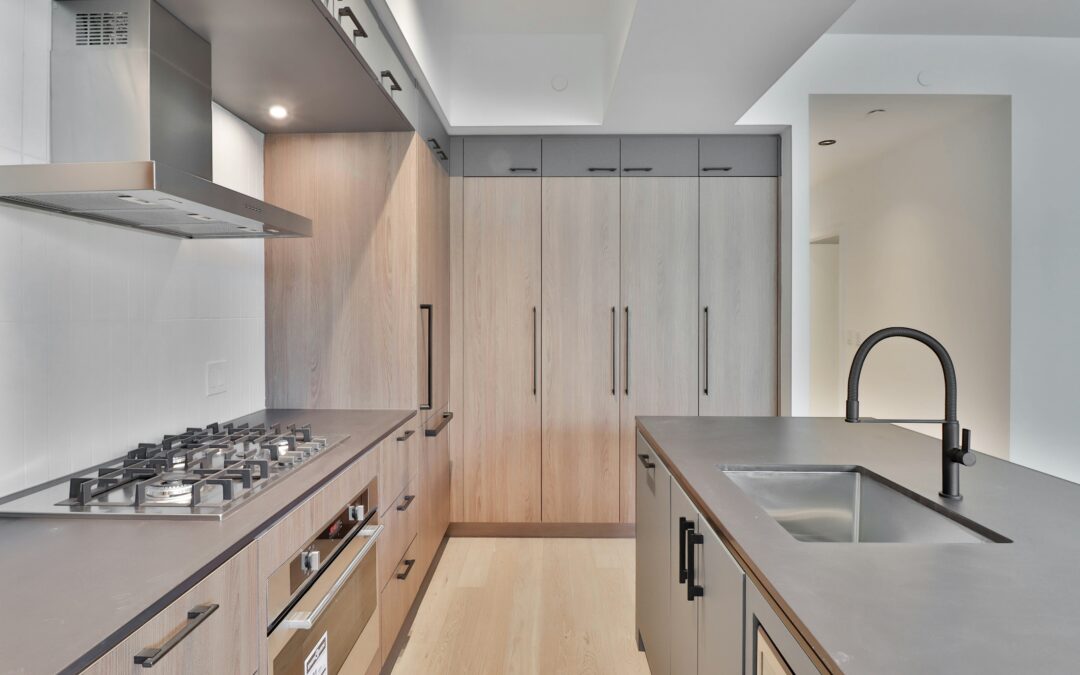
Modern cabinetry emphasizes clean lines, minimal detailing, and streamlined surfaces. Flat-panel or slab cabinet doors are common in these designs. Finishes often include matte or high-gloss surfaces in colors like white, gray, black, or navy. Handle-less doors with push-to-open mechanisms enhance the minimalist aesthetic.
Contemporary designs frequently combine materials such as wood, glass, and metal accents. Two-tone cabinetry and horizontal wood grain patterns are also popular features.
Hardware choices typically remain simple, with sleek bar pulls or geometric handles in finishes such as brushed nickel or matte black.
Traditional and Classic Cabinets
Traditional cabinetry highlights decorative details and warm materials. Shaker-style doors are widely used because of their clean frame and recessed center panel.
Raised panel doors add dimension, while elements like crown molding, corbels, and furniture-style feet enhance the traditional aesthetic. Common wood choices include cherry, maple, and oak. Finishes often lean toward natural wood tones, warm whites, and soft grays.
Premium traditional cabinetry sometimes includes inset doors, where the door sits flush inside the cabinet frame. This technique requires exceptional craftsmanship but delivers a refined and timeless appearance.
Eco-Friendly and Sustainable Options
Sustainable cabinetry focuses on environmentally responsible materials and production methods. Popular options include reclaimed wood, bamboo, and FSC-certified lumber harvested from responsibly managed forests.
Many cabinet manufacturers also offer low-VOC finishes and water-based stains, which help maintain healthier indoor air quality.
Additional sustainable materials include:
- Bamboo (rapidly renewable material)
- Reclaimed or salvaged wood
- Wheat board made from agricultural byproducts
- Recycled wood composites
Local sourcing can reduce transportation emissions, while durable construction allows cabinetry to be refinished instead of replaced.
Cost Factors for Custom Cabinetry
Hiring a custom cabinet contractor typically costs $300 to $750 per linear foot in 2026. For a mid-sized kitchen, the total investment often falls between $10,000 and $40,000, depending on materials, design complexity, and labor requirements.
Material and Labor Costs
Wood species significantly influence pricing. Premium hardwoods such as cherry or walnut generally cost more than maple or oak. Cabinet box construction also affects durability and cost. Plywood boxes usually outperform particleboard in strength and moisture resistance.
Features like soft-close hinges, pull-out shelving, and integrated storage systems add convenience but also increase overall project cost. Labor typically accounts for 30–40% of the total project investment, depending on contractor experience and regional labor rates.
Timeline Considerations
Most custom cabinet projects take eight to twelve weeks from design approval to installation. Rush orders may increase costs by 15–25%, since they require schedule adjustments and priority manufacturing.
Complex cabinetry layouts, specialty finishes, or imported materials can also extend production timelines. Demand for remodeling projects tends to increase in spring and summer, which can affect contractor availability and scheduling.
Ways to Optimize Your Investment
Choosing semi-custom cabinetry options can reduce costs while still allowing meaningful customization. Prioritize features that provide everyday value. Storage solutions like pull-out trash systems, spice racks, or deep drawers can improve functionality without unnecessary complexity.
Maintaining the existing kitchen layout can also help control costs, since moving plumbing or electrical systems increases labor requirements.
Another practical strategy is to use standard cabinet box sizes while customizing door styles and hardware. This approach reduces fabrication time and material waste while maintaining a custom appearance.
Adding open shelving in select areas instead of upper cabinets can also lower costs while introducing visual variety.
Elevate Your Kitchen With Custom Cabinetry
Choosing the right custom cabinet contractor plays a major role in the success of any kitchen remodel. The right professional combines technical skill, design knowledge, and project coordination to deliver cabinetry that fits both your space and your lifestyle.
High-quality custom cabinets offer precision craftsmanship, tailored storage solutions, and long-term durability that mass-produced cabinetry rarely matches.
At Ambiance Creations, thoughtful cabinetry design is approached as a long-term investment in your home’s functionality and beauty. Get in touch to explore how custom cabinetry can transform your kitchen with craftsmanship designed to last.
Frequently Asked Questions
What is the difference between a custom cabinet contractor and a cabinet installer?
A custom cabinet contractor manages the entire cabinetry process, including design, material sourcing, fabrication coordination, and installation. They oversee every stage to ensure cabinets are tailored to the space and function properly.
A cabinet installer typically handles only the installation portion of a project. While installers may work with custom cabinets, they usually do not participate in the design or manufacturing process.
Are custom cabinets worth the investment?
For many homeowners, custom cabinetry is a valuable long-term investment in both function and design quality. Because cabinets are built specifically for the space, they maximize storage and eliminate awkward gaps or unused areas.
Custom cabinets also tend to use higher-quality materials and construction techniques, which improve durability and longevity compared with many stock options.
How long does it take to complete custom cabinets?
Most projects take 8 to 12 weeks from final design approval to installation. The timeline can vary depending on design complexity, material availability, and the contractor’s schedule. Additional customization, specialty finishes, or imported materials may extend the production timeline slightly.
What materials are commonly used for custom cabinets?
Popular wood choices include maple, oak, cherry, birch, and walnut, each offering different grain patterns and durability levels. Cabinet boxes are often constructed with high-quality plywood, while doors and frames may use solid hardwood. Hardware such as hinges, drawer slides, and handles also play an important role in performance and longevity.
Can custom cabinets be designed for small kitchens?
Yes. One major advantage of working with a custom cabinet contractor is the ability to design cabinetry that fits unusual layouts or limited spaces. Custom cabinets can incorporate vertical storage, pull-out shelving, corner solutions, and compact organizers that help maximize every inch of available space.
Do custom cabinets increase home value?
Well-designed cabinetry can enhance both visual appeal and practical storage, which buyers often appreciate when evaluating a home. Because custom cabinets fit precisely within the room and use higher-quality materials, they often contribute to a stronger overall impression of craftsmanship and care throughout the home.