
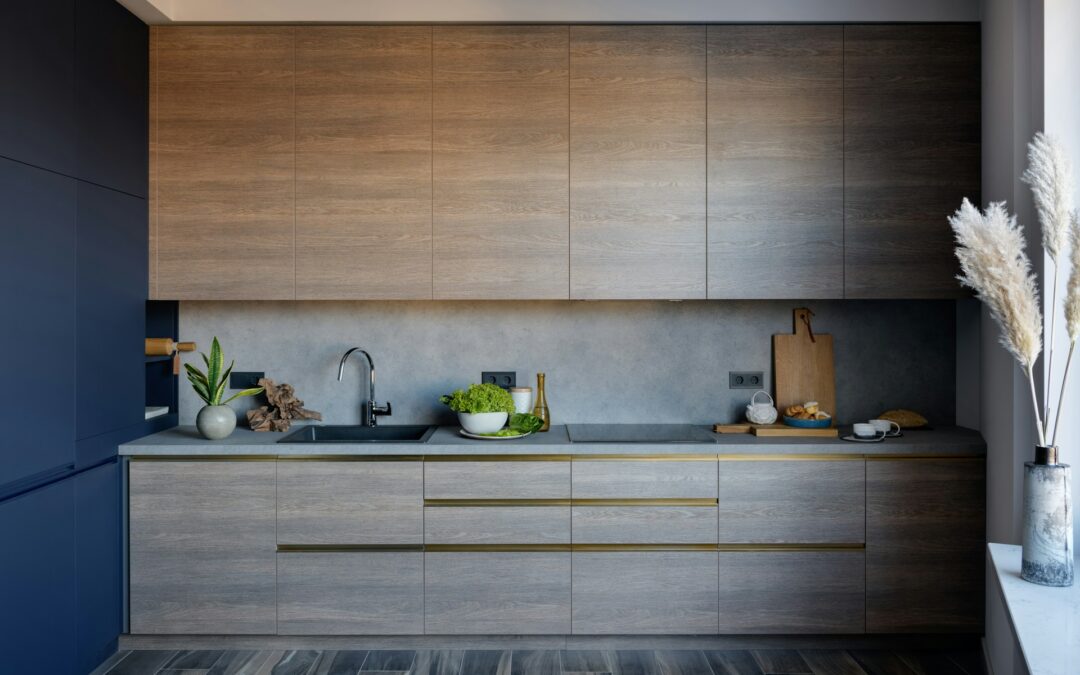
Kitchen cabinets affect more than just how your space looks. Materials, finishes, and construction methods can impact indoor air quality, durability, and long-term maintenance.
Eco-friendly cabinetry addresses common concerns such as chemical odors, premature wear, and guilt over using wasteful materials. At Ambiance Creations, we focus on solutions that protect your home’s air, hold up to daily use, and still look refined.
This guide breaks down what truly makes cabinetry sustainable, which materials matter most, and how to choose options that support a healthier kitchen without compromising design.
What Is Eco-Friendly Cabinetry?
Eco-friendly cabinetry relies on materials and manufacturing that reduce harm to both the planet and your indoor air. These cabinets favor renewable resources, non-toxic finishes, and responsible production methods. Instead of the usual shortcuts, they prioritize long-term performance and healthier interiors.
Defining Sustainable Cabinet Materials
Sustainable cabinet materials come from renewable or recycled sources that tread lightly on the earth. FSC-certified wood comes from forests managed with care, where trees get replanted, and habitats are protected. This certification means your cabinets aren’t fueling deforestation.
Bamboo grows at lightning speed, taking 3–5 years to mature, compared to 20–50 years for hardwoods like oak or maple. That makes it a super renewable choice for cabinets and a standout in eco-friendly cabinetry. It’s one of the easiest ways to shift your kitchen toward more sustainable sourcing.
Reclaimed wood salvages old materials from barns, warehouses, and other buildings. Giving this wood a second life keeps it out of the landfill and saves new trees from the axe. It also adds character you simply can’t replicate with fresh-milled lumber.
Formaldehyde-free materials are a must for sustainable cabinetry. Regular cabinets often use particleboard or MDF loaded with formaldehyde-based adhesives, which can off-gas into your home. Eco-friendly cabinetry options skip those toxins and use safer binders.
Recycled materials like post-consumer wood products and recycled metal hardware also help cut demand for new resources. These choices close the manufacturing loop and keep more waste out of landfills. Small details, like hinges and pulls, can still support a greener cabinet system.
Understanding Environmental Certifications
Environmental certifications give you a way to double-check that your cabinets meet sustainability standards. FSC (Forest Stewardship Council) certification is often considered the gold standard for responsibly sourced wood. It tracks the wood from the forest to your kitchen.
CARB (California Air Resources Board) certification caps formaldehyde emissions from composite wood. CARB2 is the strictest version, and if you see it, you know the cabinets are safer for your air. This is especially helpful when comparing engineered materials.
GREENGUARD certification tests products for low chemical emissions. GREENGUARD Gold goes even further, focusing on sensitive environments like schools and hospitals. If indoor air quality is a priority, this label matters.
LEED (Leadership in Energy and Environmental Design) points can be earned when you opt for certified sustainable cabinetry. Those points add up toward an overall building sustainability rating. If you’re remodeling as part of a bigger plan, eco-friendly cabinetry can support that goal.
Don’t just take manufacturers at their word; ask for documentation. The good ones won’t hesitate to show you proof of their certifications. Paperwork is part of responsible sourcing.
Distinctions From Traditional Cabinetry
Traditional cabinetry often relies on particleboard or MDF, both of which are held together with formaldehyde-based adhesives. Those materials can keep releasing VOCs into your home for years. Eco-friendly cabinetry uses formaldehyde-free alternatives or solid wood instead.
Standard cabinet finishes often contain higher levels of VOCs, which can pollute indoor air and trigger health issues. Sustainable options use water-based or low-VOC finishes that are safer for your household and the planet. That’s a major upgrade you can feel day to day.
Green manufacturers use energy-efficient production, cut down on waste, and often source materials locally. Traditional cabinet makers often focus on cost-cutting, not environmental impact. With eco-friendly cabinetry, the process matters as much as the product.
Durability stands out, too. Eco-friendly cabinetry tends to last longer, so you won’t be replacing it as often or sending it to the landfill. Traditional cabinets may use cheaper materials that wear out faster.
Sustainable cabinets often include recycled metal and other eco-conscious choices for hardware. Traditional lines rarely consider the impact of those little parts. Over time, the details add up.
Benefits of Choosing Eco-Friendly Cabinets
Eco-friendly cabinetry brings some real perks. It cuts down on harmful chemicals at home, shrinks your environmental footprint, and may support long-term value. For many homeowners, it’s a practical blend of wellness and performance.
Positive Environmental Impact
Choosing eco-friendly cabinetry helps protect forests and reduce waste. FSC-certified wood comes from forests where trees are replanted, helping keep habitats and clean air intact. That sourcing choice has ripple effects beyond your kitchen.
Reclaimed wood cabinets breathe new life into old materials instead of sending them to the dump. Bamboo is a smart move too; it grows back fast, while hardwoods take decades. Less pressure on forests means more resilience for ecosystems.
Manufacturers make a difference, too. Many use less water and energy in their factories and get creative with efficient cutting or recycling scraps. Those operational choices reduce waste across the supply chain.
Picking sustainable cabinets lowers demand for new resources and cuts pollution from harvesting and processing. That ripple effect matters for ecosystems and future generations. Eco-friendly cabinetry is one of those upgrades that quietly does a lot of good.
Improved Indoor Air Quality
Traditional cabinets can fill your home with VOCs, volatile organic compounds, from glues, paints, and finishes. Those chemicals can trigger headaches, dizziness, and breathing issues. Over time, they may contribute to bigger health concerns.
Eco-friendly cabinetry uses low-VOC or zero-VOC finishes that don’t release the same toxins. Water-based paints and plant-based oils are common in green cabinetry, keeping your air cleaner and safer. If anyone has allergies, asthma, or chemical sensitivities, this can be a game-changer.
You’ll probably notice the difference right away. Eco-friendly cabinetry doesn’t have that strong “new cabinet smell,” which is really off-gassing chemicals. A fresher kitchen can be a healthier kitchen.
Energy Efficiency Considerations
The energy used to make your cabinets plays a part in your environmental impact. Some eco-friendly manufacturers power their factories with solar or wind. Cleaner energy reduces the footprint behind the scenes.
Buying locally made cabinets cuts down on fuel used for shipping, which means fewer carbon emissions. Supporting companies in your region can shrink your project’s footprint. Eco-friendly cabinetry can be greener simply by traveling fewer miles.
Some manufacturers use energy-saving equipment and LED lighting in their production lines. These choices lower the total energy used to make your cabinets. The cabinets don’t use energy, but the supply chain still counts.
Popular Eco-Conscious Materials
Picking the right cabinet materials can reduce your environmental impact and still deliver a beautiful kitchen. There are plenty of sustainable choices, from salvaged wood to fast-growing plants and recycled products. The best eco-friendly cabinetry balances durability, aesthetics, and healthier finishes.
Reclaimed Wood Options
Reclaimed wood gives old materials a fresh start instead of chopping down new trees. This wood comes from old barns, factories, and warehouses being torn down or renovated. It’s a strong match for homeowners who value character and history.
Each piece of reclaimed wood has its own quirks, grain, knots, and color shifts. These details bring warmth and a story to your cabinets that new lumber can’t match. Reclaimed materials can make eco-friendly cabinetry feel truly one-of-a-kind.
Using reclaimed wood keeps waste out of landfills and saves energy needed to process new lumber. You also avoid many chemicals used to treat fresh wood. Because it’s already aged and stable, it may be less likely to warp or crack.
Heads up: reclaimed wood usually costs more than new wood because it requires extra prep work. Removing nails, cleaning, and milling take time, and quantities can be limited. That can make it better for smaller projects or accent sections.
Bamboo and Renewable Choices
Bamboo matures in just 3–5 years, while oak or maple can take decades. Despite being a grass, bamboo is tough enough for heavy kitchen use. It’s a leading material in eco-friendly cabinetry for a reason.
It can better resist moisture than many woods, which helps in higher-humidity kitchens. Bamboo has a clean, modern vibe with its visible grain. You can get it in natural blonde or darker caramelized shades, depending on processing.
It needs less water and fewer pesticides than many crops. If you’re considering bamboo cabinets, check for credible sourcing and solid finishing practices. Responsible harvesting keeps renewable materials truly sustainable.
Recycled and Low-VOC Materials
Plywood made with eco-friendly adhesives gives you strength without the harsh fumes. Traditional plywood often uses formaldehyde-based glues that can off-gas for years. For eco-friendly cabinetry, adhesive choice is a major health factor.
Low-VOC and formaldehyde-free adhesives protect your air. More manufacturers are offering safer options as awareness of chemical exposure grows. That shift is improving the market overall.
Recycled materials, like reclaimed metal, composite wood made from scraps, and recycled plastic, offer more options. These materials keep waste out of landfills and can use less energy than making products from scratch. They also expand style choices beyond standard wood-only palettes.
When it comes to finishes, stick with water-based stains and sealers with low or zero VOCs. These products protect your cabinets and your air. Eco-friendly finishes have caught up to traditional ones in performance, minus the health risks.
Design and Style Options
Eco-friendly cabinetry comes in every style you can dream up, from sleek and modern to cozy and traditional. There’s no reason to sacrifice taste for values. The key is pairing the right materials with the right construction and finish.
Modern and Contemporary Styles
Modern eco-friendly cabinetry leans into clean lines and simplicity, making kitchens feel open and bright. Flat-panel doors, handleless designs, and smooth finishes in white, gray, or natural tones all work well. The look can be minimal while still feeling warm.
Bamboo fits contemporary kitchens thanks to its light color and even grain. Reclaimed wood, refinished with low-VOC stains, can create a minimalist look with natural texture. That balance makes eco-friendly cabinetry feel elevated, not rustic by default.
Many modern designs use frameless construction, which can reduce material waste. You’ll also see integrated handles or push-to-open hardware, reducing extra metal pieces. These details support a streamlined, functional layout.
Popular modern features include:
- High-gloss or matte finishes in neutrals
- Horizontal grain patterns
- Mixed materials like wood and recycled glass
- Open shelving alongside closed cabinets
Traditional and Rustic Looks
Traditional eco-friendly cabinetry warms up your kitchen with raised panel doors and classic craftsmanship. Reclaimed wood is a natural fit, since marks and aging add character. It can make a new kitchen feel established and inviting.
Sustainable options include Shaker-style doors with simple frame-and-panel construction. FSC-certified hardwoods like oak, maple, and walnut deliver a timeless look with responsible sourcing. Traditional style can still align with eco-friendly cabinetry goals.
Rustic designs show off grain, distressed finishes, and natural color shifts. These styles benefit from reclaimed materials because imperfections add charm. It’s a rare case where “less perfect” looks even better.
Traditional style elements include:
- Raised or recessed panel doors
- Decorative molding and trim
- Oil-rubbed or antique bronze hardware
- Deep stain colors in warm shades
Custom Eco-Friendly Cabinetry Solutions
Custom cabinets let you get exactly what you want while choosing sustainable materials and finishes. You can work with designers to create cabinets that fit your space and match your style. That flexibility often improves storage, flow, and daily functionality.
Many cabinet makers offer customizable options using eco-friendly materials. Choose formaldehyde-free boards, low-VOC finishes, and locally sourced wood to keep your footprint low. Custom eco-friendly cabinetry can be both personal and responsible.
Custom cabinets also help reduce waste since they’re built to your specs. There’s less need for filler pieces or awkward gaps that waste material. A good plan can also reduce rework and unused components.
Working with specialized kitchen designers can open access to premium, eco-friendly systems. You’ll also get clearer guidance on which materials and finishes perform best in real kitchens. That expertise helps protect your investment.
How to Choose the Right Sustainable Cabinets
Finding the right eco-friendly cabinetry means checking material quality, setting a realistic investment range, and verifying claims. A few smart checkpoints can keep your project aligned with both performance and sustainability. It’s about selecting what lasts, not just what sounds good on a label.
Evaluating Quality and Durability
Sustainable cabinets should stick around for decades. Look for solid wood construction or high-quality engineered materials like FSC-certified plywood. Pay attention to joinery, dovetail, and mortise-and-tenon joints, which hold up better than staples or basic glue.
The finish is just as important as the wood. Ask about VOC levels in paints and stains, and prioritize low-VOC or water-based finishes. That protects your air and reduces emissions during manufacturing.
Test doors and drawers yourself. Open and close them repeatedly, hinges should feel sturdy and smooth, not loose or squeaky. Soft-close hardware is a nice touch and can help components last longer.
Don’t be shy about warranties. A company offering a 10-year or lifetime warranty likely believes in its build quality. Eco-friendly cabinetry should come with confidence, not caveats.
Planning for Green Upgrades
Eco-friendly cabinetry often runs 10–30% more than standard options. That extra cost can reflect sustainable sourcing, better materials, and more responsible manufacturing. It’s often an investment in longevity and indoor comfort.
You can save by choosing semi-custom cabinets instead of fully custom. Stock eco-friendly cabinetry can cost less but may have fewer style options. Refacing existing cabinets with sustainable materials can also reduce cost compared to full replacement.
Think about the long run. Quality sustainable cabinets last longer and may need fewer repairs. They can also support resale appeal as more buyers look for healthier, lower-emission materials.
Set aside 5–10% of your total investment for surprises. Upgraded hardware, added organizers, or small layout changes can pop up mid-project. A cushion keeps the process smooth.
Working With Eco-Friendly Cabinet Suppliers
Look for suppliers with third-party certifications like FSC, CARB2, or GREENGUARD. These standards back environmental claims through independent testing. That’s how you separate real eco-friendly cabinetry from marketing talk.
Don’t rely on buzzwords like “green” or “natural.” Ask for verification, and read the documentation. Responsible suppliers will share details without hesitation.
Ask direct questions about materials and processes. Where is the wood from, what adhesives are used, and how do they reduce waste in production? Clear answers usually signal a mature supply chain.
Request samples before committing to a big order. Check finish quality and construction up close, and compare samples from a few sources. Small differences can become big frustrations after installation.
Read customer reviews that mention durability and support. A good supplier responds quickly and provides clear documentation about materials and certifications. Local suppliers may also reduce shipping emissions and strengthen regional economies.
A Smarter Way to Build a Healthier Kitchen
Cabinet choices shouldn’t leave you dealing with chemical smells, early wear, or uncertainty about what’s really in your home. Eco-friendly cabinetry addresses those concerns with safer materials, better construction, and longer-lasting results.
By focusing on verified certifications, low-emission finishes, and durable craftsmanship, you reduce stress now and avoid costly replacements later. The right approach protects both your indoor air and your investment.
If you want clear guidance and proven materials, Ambiance Creations helps simplify the process. Get in touch to explore cabinetry solutions designed for comfort, longevity, and peace of mind.
Frequently Asked Questions
What makes cabinetry truly eco-friendly?
Eco-friendly cabinetry uses responsibly sourced materials, low-emission adhesives, and non-toxic finishes. The goal is to reduce environmental impact while improving indoor air quality and long-term durability.
Are eco-friendly cabinets as durable as traditional cabinets?
Yes. High-quality, eco-friendly cabinetry often lasts longer because it avoids low-grade composites and prioritizes solid construction. Better materials and joinery typically mean fewer repairs over time.
Do eco-friendly cabinets help with chemical odors in the kitchen?
They do. Low-VOC and formaldehyde-free materials significantly reduce off-gassing, which is the source of strong chemical smells often noticed after installation.
Is eco-friendly cabinetry limited in style options?
Not at all. Eco-friendly cabinetry is available in modern, transitional, and traditional styles. Sustainable materials now support a wide range of finishes, colors, and door profiles.
How can I verify sustainability claims from a cabinet supplier?
Look for third-party certifications such as FSC, CARB2 compliance, or GREENGUARD. Reputable suppliers should provide documentation detailing material sourcing and emission standards.
Does eco-friendly cabinetry cost more upfront?
It can require a higher initial investment due to better materials and responsible manufacturing. However, longer lifespan and reduced maintenance often balance costs over time.
Can existing cabinets be upgraded to be more eco-friendly?
Yes. Refacing with sustainable materials, switching to low-VOC finishes, or replacing hardware with recycled options can significantly improve sustainability without full replacement.
Who benefits most from choosing eco-friendly cabinetry?
Homeowners concerned about indoor air quality, long-term durability, and environmental responsibility benefit most. It’s especially valuable for households with allergies, asthma, or sensitivity to chemicals.