
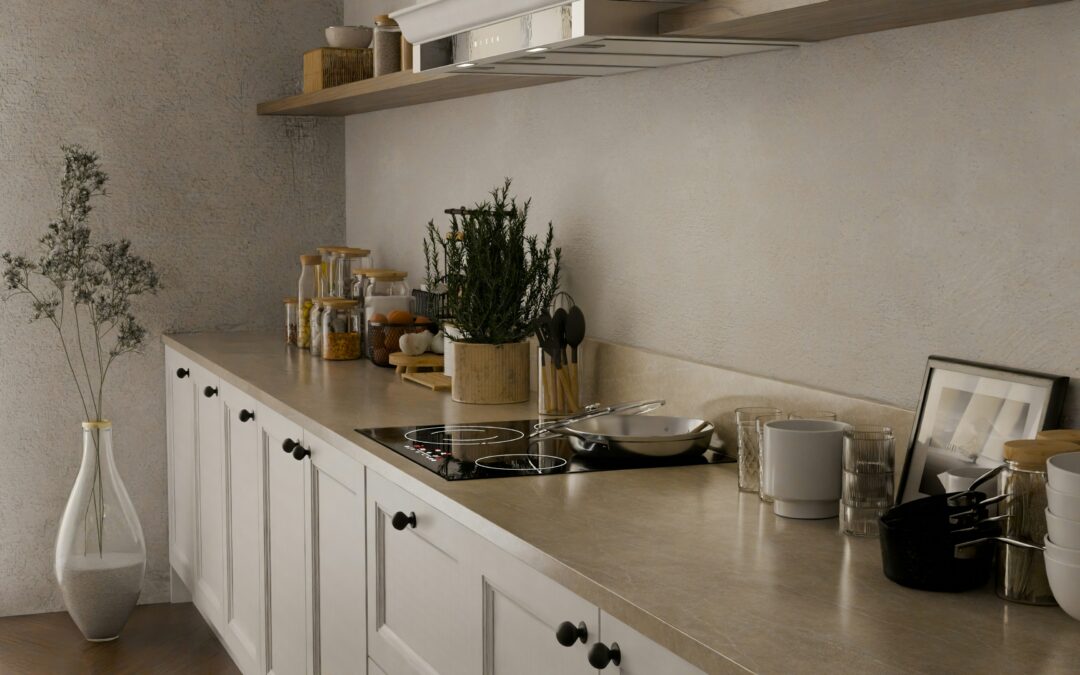
Many kitchens fall short because the kitchen cabinet styles don’t match how the space is actually used. Poor layout choices, limited storage, and mismatched finishes can quickly turn a beautiful design into a daily frustration.
At Ambiance Creations, we approach cabinetry with a focus on function first, ensuring every design decision supports how you cook, store, and move through your space. The right style should enhance both performance and visual appeal.
This guide highlights the most effective styles, materials, and features to help you make informed decisions and create a kitchen that feels cohesive, efficient, and tailored to your lifestyle.
Popular Kitchen Cabinet Styles
Shaker cabinets lead with their simple five-piece design, while flat-panel doors offer a sleek alternative. Glass-front and inset cabinets add personality and craftsmanship, giving you multiple ways to express your style.
Shaker Cabinets
Shaker cabinets feature a five-piece door with a flat center panel and square frame. This style originated with the Shaker community, known for craftsmanship and simplicity.
Clean lines allow these cabinets to work in nearly any kitchen. Pair them with rustic hardware for a traditional look, or combine them with modern finishes for a fresh update.
Common features include:
- Recessed center panel
- Square edges and corners
- Rail and stile construction
- Minimal detailing
You will find Shaker cabinets across price points, from stock to custom builds, in painted or natural wood finishes.
Flat-Panel Cabinets
Flat-panel cabinets feature smooth, unembellished doors that suit modern, minimalist kitchens. Their simplicity makes cleaning easy and keeps the design streamlined.
Designers often incorporate horizontal grain, handleless systems, or integrated pulls to maintain clean lines. These cabinets pair well with stainless steel appliances and geometric surfaces.
Popular finishes include:
- High-gloss lacquer
- Matte paint
- Natural wood veneer
Dark tones create contrast, while light neutrals open the space visually.
Glass-Front Cabinets
Glass-front cabinets replace solid panels with clear, frosted, or textured glass. This design allows you to display dishware while keeping it protected.
They work well as accents or as a backdrop for upper cabinets. Interior lighting enhances visibility and adds ambiance.
Glass options include:
- Clear for full display
- Frosted for softness
- Textured for decoration
- Mullioned for traditional detail
Keep contents organized, since everything remains visible.
Inset Cabinets
Inset cabinets place doors and drawers inside the frame for a flush, tailored appearance. Skilled craftsmanship and precise installation define this style.
You will notice consistent spacing and a furniture-like finish. This design suits traditional and transitional kitchens, but requires level surfaces for proper alignment.
Traditional Versus Modern Cabinet Designs
Traditional cabinets emphasize detail and warmth, while modern designs focus on simplicity and efficiency. Transitional styles combine both approaches.
Classic Traditional Styles
Traditional cabinets highlight craftsmanship with raised panels, molding, and decorative trim. Rich wood tones such as cherry, maple, and oak create depth. Hardware plays a key role. Brass, bronze, and antique finishes add character and complete the look. These cabinets pair well with architectural details and create a welcoming, timeless environment.
Contemporary and Minimalist Designs
Modern cabinets prioritize function and clean lines. Flat-panel doors and neutral palettes define the aesthetic. Designers often minimize or conceal hardware. Push-to-open systems or slim bar pulls maintain a streamlined appearance.
Efficient storage solutions and full-extension drawers enhance usability while preserving a modern look.
Transitional Cabinets
Transitional cabinets balance traditional warmth with modern simplicity. A subtle Shaker profile often anchors the design. Neutral color palettes and understated hardware create flexibility. These cabinets adapt easily to evolving trends and diverse interiors.
Explore open-shelving cabinets: stylish storage for modern homes.
Material and Finish Options for Cabinets
Materials and finishes shape durability, appearance, and maintenance. Choosing wisely ensures long-term satisfaction.
Wood Species and Alternatives
Popular wood choices include oak, maple, cherry, and walnut. Each offers distinct grain patterns and color tones. Engineered materials like MDF and plywood provide stability and cost efficiency. Veneers combine real wood surfaces with durable cores.
Painted Versus Stained Finishes
Painted cabinets deliver a smooth, uniform look and allow bold color choices. Stained finishes highlight natural grain and add depth. Paint requires more upkeep, while stain better conceals wear over time. Both options offer protective topcoats in various sheens.
High-Gloss and Matte Surfaces
High-gloss finishes reflect light and create a modern feel, though they show fingerprints easily. Matte finishes reduce glare and hide wear. Satin finishes provide a balanced option with moderate sheen and easier maintenance.
Cabinet Door Features and Accents
Details elevate cabinetry from functional to expressive design elements.
Custom Molding and Detailing
Custom molding adds dimension through profiles like beaded edges or raised panels. Use these details selectively to avoid overwhelming the space. Match the molding style to the overall design direction for cohesion.
Mixed Material Styles
Combining materials creates contrast and visual interest. Glass, metal mesh, and mixed wood tones introduce variety while maintaining balance. Limit combinations to two or three materials to keep the design cohesive.
Decorative Hardware Choices
Hardware acts as a finishing detail that influences the entire look.
Popular finishes include:
- Matte black
- Brushed brass
- Polished chrome
- Oil-rubbed bronze
Coordinate hardware with other fixtures to maintain consistency across the space.
Trends in Kitchen Cabinet Styles
Current trends emphasize flexibility, contrast, and sustainability.
Open Shelving Integration
Open shelving introduces display space and breaks up solid cabinetry. It creates a lighter, more open feel while showcasing curated items.
Two-Tone Cabinets
Two-tone designs combine contrasting colors or materials. Dark lower cabinets with lighter uppers remain a popular choice. This approach adds dimension without overwhelming the space.
Eco-Friendly Materials
Sustainable cabinetry uses bamboo, reclaimed wood, and low-VOC finishes. These materials improve indoor air quality and reduce environmental impact. Manufacturers now offer eco-conscious options without compromising design or durability.
Elevate Your Space with Thoughtful Cabinet Design
Choosing the right kitchen cabinet styles transforms both the look and function of your kitchen. Each decision, from door style to finish, contributes to a cohesive and lasting design.
A well-planned approach ensures your cabinetry supports daily life while reflecting your personal style. Prioritize quality materials, practical layouts, and refined details for the best results.
At Ambiance Creations, every project reflects a commitment to craftsmanship and tailored design. Get in touch to explore cabinetry solutions that elevate your kitchen experience.
Frequently Asked Questions
What are the most popular kitchen cabinet styles today?
Shaker, flat-panel, and transitional designs remain the most popular kitchen cabinet styles. Shaker offers versatility, flat-panel suits modern spaces, and transitional blends both for a balanced look.
How do I choose the right cabinet style for my kitchen?
Start with how you use your kitchen daily. Consider storage needs, layout, and overall home style. Then select a cabinet design that supports function while aligning with your aesthetic.
Are painted or stained cabinets better?
Painted cabinets create a clean, modern finish, while stained cabinets highlight natural wood grain. Painted options require more upkeep, while stained finishes better conceal wear over time.
What cabinet style works best for small kitchens?
Flat-panel cabinets and lighter colors help small kitchens feel more open. Minimal detailing and integrated hardware reduce visual clutter and improve flow.
Are inset cabinets worth the investment?
Inset cabinets offer a precise, tailored look with high craftsmanship. They require skilled installation and typically cost more, but they deliver a refined, furniture-like finish.
Can I mix different cabinet styles in one kitchen?
Yes, mixing styles can add depth and personality. Use one dominant style and introduce accents, such as glass-front doors or a contrasting island, to maintain cohesion.
What materials last the longest for kitchen cabinets?
Hardwoods like maple, oak, and walnut provide durability. Engineered materials like plywood also offer strong performance and resist warping over time.
Do cabinet trends change often?
Trends evolve, but classic styles like Shaker and neutral palettes remain consistent. Choosing timeless elements with subtle modern updates ensures long-term appeal.