
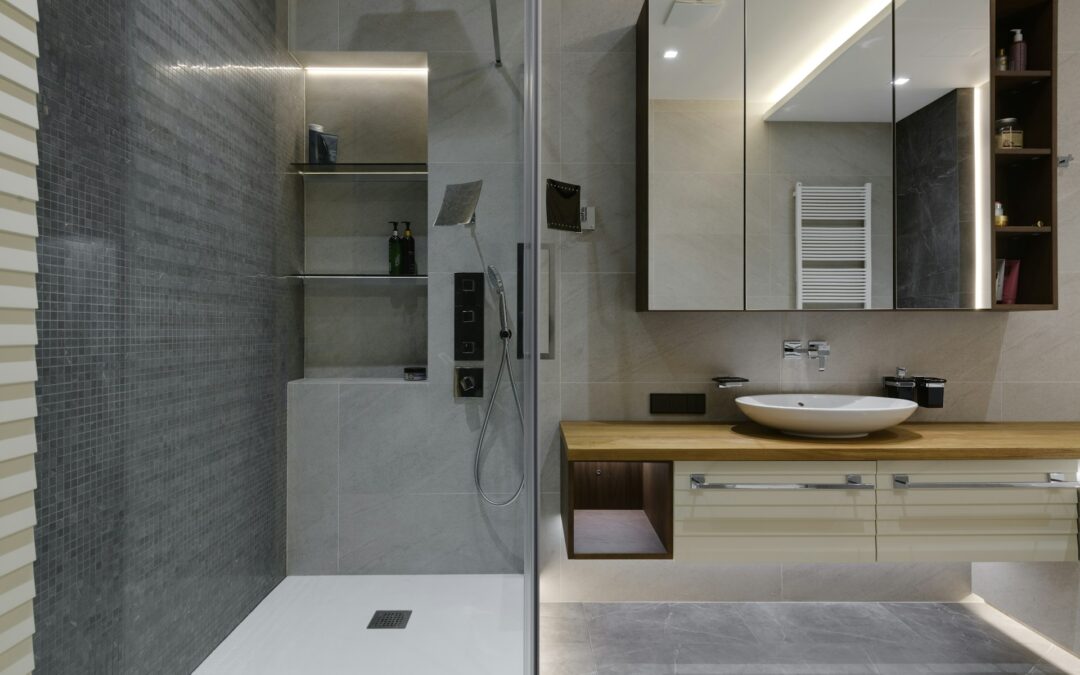
A bathroom that feels cramped, harsh, and cluttered can make mornings stressful and evenings anything but restful. Wellness bathroom design solves that by improving comfort, calm, and everyday flow.
At Ambiance Creations, we design bathrooms that balance quality, integrity, and functionality with a look that feels uniquely yours. The goal is a space that supports real routines while delivering a spa-like reset.
Ahead, you will find practical upgrades for layout, materials, lighting, air and water quality, smart features, and personal touches that make the room feel better to live in.
Principles of Wellness Bathroom Design
A wellness bathroom comes together when you pay attention to how you move through the space, how the layout supports calm, and how practical features blend with peaceful design choices.
Integrating Wellness Concepts
Bringing nature inside is a great place to start. Biophilic elements such as live ferns or snake plants can improve air quality and create a subtle link to the outdoors. Natural materials make a difference too, with wood vanities, stone counters, or bamboo accessories helping the room feel grounded and organic.
Let your senses steer the design. Soft towels and bath mats feel good underfoot. Natural light streaming in through a window is a game-changer compared to harsh bulbs. A dimmer switch lets you adjust the brightness to match your mood, giving you options.
Water features are not just about the shower or tub. A rainfall showerhead mimics gentle rain and feels more relaxing. Chromotherapy lighting that shifts colors can set the mood during a bath and may even support a calmer mindset.
Space Planning for Relaxation
A good layout should ease your stress, not add to it. Give yourself enough room to move without bumping into surfaces or fighting for counter space. A cramped bathroom feels chaotic, even with beautiful finishes.
Set up zones for different activities. Your grooming area needs solid lighting and storage within reach. The bathing zone should feel open and spa-like, with clutter tucked away. Try to keep at least 30 inches of clearance in front of the toilet and sink, as this affects how the room functions.
Smart storage keeps things calm. Built-in niches hold shower products without the mess of hanging caddies. Medicine cabinets hide daily essentials. Drawer dividers make it easier to find what you need without digging through a jumble.
Balancing Function and Serenity
Your wellness bathroom should work for everyday routines while still feeling peaceful. Pick fixtures that do their job and also look simple and clean. A modern vessel sink, for example, can be both attractive and practical.
Smart technology can make things more comfortable without adding visual noise. Heated floors are a treat on cold mornings. A programmable shower remembers your favorite settings. Motion-sensor faucets help cut down on germs and reduce water waste.
Choose materials that resist mold and mildew, as they can affect air quality and require extra maintenance. Sealed grout lines and a strong ventilation fan keep things fresh with less effort.
Spa-Like Features and Elements
A spa bathroom is all about natural-feeling materials, calming colors, and lighting that matches your mood from morning to night.
Natural Materials and Textures
Wood, stone, and bamboo bring a hint of the outdoors inside and add visual interest. These materials work for vanities, floors, or accent walls, adding warmth without making things feel cold or sterile.
Stone tiles in neutral tones ground the space. Try river rocks or pebble mats for shower floors, as they can feel like a gentle foot massage. Teak and cedar naturally resist moisture, making them excellent for bath mats, benches, or shelves.
Textured surfaces add depth without overwhelming. Limestone tiles, slate panels, or wood-look porcelain can mimic natural grain. Natural fiber baskets organize toiletries while keeping the vibe organic. Cotton towels and linen curtains in earthy colors round out the sensory experience.
Soothing Color Palettes
Soft neutrals and nature-inspired shades create the calm you would expect in wellness bathroom design. White, beige, warm gray, and cream make a strong base.
Accent colors should come from nature. Sage green hints at plants and forests. Soft blue brings in water and sky. Warm taupe and sand tones echo earth and stone. Keep your palette simple, with two or three colors at most, because too many start to feel busy.
Matte finishes usually work better than glossy ones for this atmosphere. They absorb light and feel softer.
Lighting for Wellbeing
Layered lighting gives you options for brightness and mood. You will want three types: ambient, task, and accent.
Ambient lighting fills the room through ceiling fixtures or recessed lights. Dimmer switches let you set the scene, whether you are waking up or winding down. Task lighting by the mirror makes grooming easier, and fixtures on both sides at eye level help avoid harsh shadows.
Accent lighting is about atmosphere, such as candles, LED strips under vanities, or small spotlights on natural materials. Warm color temperatures in the 2700K to 3000K range feel softer than bright, cool-toned light.
Air and Water Quality Enhancements
Good air and water quality support health and comfort. Clean water fixtures reduce unwanted contaminants, while ventilation and humidity control keep the air fresh and help prevent mold.
Purified Water Fixtures
Bathroom water filtration systems can reduce chlorine, heavy metals, and other irritants that affect the skin or hair. You can choose whole-house filtration or add filters directly to your shower and sink.
Filtered showerheads are easy to install and can help keep skin from feeling dried out. Some higher-performance fixtures use vitamin C filters or multi-stage filtration designed to reduce chlorine and other impurities. Plan to swap filters every 6 to 12 months, depending on your water and usage.
Ventilation for Freshness
Ventilation removes moisture, odors, and airborne chemicals. An exhaust fan matched to your bathroom size should run during showers and for 20 to 30 minutes afterward to clear humidity.
Look for fans with the right CFM for your space. Bathrooms generally need about 1 CFM per square foot. Quieter fans under 1.0 sone help protect the peaceful vibe.
Air purifiers with HEPA filtration can capture dust, mold spores, and allergens. Models with carbon filters can also help reduce chemical odors from cleaning products.
Humidity Control Solutions
Keeping humidity between 30% and 50% helps prevent mold and protects surfaces. A hygrometer makes it easier to monitor conditions.
Automatic humidity-sensing fans turn on when moisture levels spike and shut off when the air dries out. Heated floors also help by warming the room and speeding evaporation after showers. In windowless or extra-humid bathrooms, a small dehumidifier can make a meaningful difference.
Smart Technology for Wellness
Bathrooms are getting smarter, with voice controls, automatic temperature adjustments, and lighting that shifts with the day. These features can support comfort and relaxation when integrated thoughtfully.
Voice-Activated Controls
Voice-activated systems let you adjust water temperature, turn lights on or off, and start your shower with a simple command. These systems often pair with digital assistants you may already use.
You can say “start the shower at 102 degrees” or “dim the lights to 30 percent” while your hands are full. This can be especially helpful if you have mobility challenges or prefer fewer touchpoints in the space.
Smart mirrors with voice control can display the weather, your schedule, or headlines while you get ready. Some also remember your lighting preferences for consistent comfort.
Therapeutic Showers
Digital shower systems let you save preferred temperature, pressure, and spray patterns. Morning showers can feel energizing, while evening sessions can be tuned for decompression.
Some systems include body jets that target sore areas. You can adjust the flow to focus on the shoulders, lower back, or legs, and the temperature stays steady without sudden changes.
Steam features turn a shower into a mini sauna. Warm steam can open airways and ease muscle tension. Many systems also support aromatherapy, adding a calming layer to your routine.
Mood Lighting Systems
Smart bathroom lighting can shift throughout the day to better match your natural sleep-wake rhythm. Bright, cool light in the morning supports alertness, while warm, dim light in the evening supports winding down.
Set up scenes for different tasks, such as brighter lighting for grooming and softer lighting for soaking. Color-changing LEDs can fine-tune the mood, with blue and green tones often feeling more tranquil, and warmer tones feeling cozy.
Personalization and Mindful Touches
Making your bathroom feel personal means adding details that speak to your senses and support your routines. The right scents, a quiet place for reflection, and natural elements can turn simple habits into moments of calm.
Aromatherapy Integrations
Scent can shift mood quickly. Essential oil diffusers let you choose the tone of the day. Lavender and chamomile are often used for evenings.
Eucalyptus or peppermint can feel refreshing in the morning. Some steam shower systems include aromatherapy dispensers for easy use.
Scented candles can work too, especially natural soy or beeswax without synthetic fragrances. Reed diffusers provide a steady scent without a flame.
Common aromatherapy scents and their benefits:
- Lavender: Reduces stress and supports sleep
- Eucalyptus: Clears sinuses and sharpens focus
- Citrus: Lifts mood and boosts energy
- Peppermint: Relieves tension and supports concentration
Space for Meditation
You do not need much room for a meditation spot. Even a corner with a cushion or bath mat can work.
Place it away from the sink and toilet when possible. Near a window with natural light is ideal, or choose a quiet corner with minimal clutter. A small shelf for a timer, journal, or calming object can make it easier to keep the habit.
Consistency matters more than perfection. Using the same spot daily helps build the routine, whether it is before a shower to set intentions or after a bath to slow down.
Greenery and Biophilic Decor
Plants bring life and can support cleaner-feeling air. They also create a subtle connection to nature that fits the heart of wellness bathroom design.
Snake plants and pothos often do well in humid, low-light bathrooms. Bamboo can thrive near sinks, and ferns love steamy air. If you have a window, aloe or spider plants can be great options.
Do not stop at living plants. River stones, wooden bath accessories, or bamboo organizers add natural texture. A small water fountain can add a gentle sound and mask less pleasant noise. Natural fiber rugs, woven baskets, and raw wood shelving reinforce that nature-inspired feeling.
Designed to Feel Better Every Day
When a bathroom feels noisy, tight, or hard to maintain, it adds friction to daily life. A well-planned wellness bathroom design removes that stress by improving flow, comfort, and how the space supports you.
The right materials, lighting, and layout choices create a bathroom that feels calmer, healthier, and easier to use without unnecessary complexity. Small details make a meaningful difference over time.
With Ambiance Creations, the focus is thoughtful design that works for real routines while elevating the experience. Get in touch!
Frequently Asked Questions
What is wellness bathroom design?
Wellness bathroom design focuses on creating a space that supports comfort, calm, and healthier daily routines. It blends thoughtful layout, natural materials, lighting, and performance features to reduce stress and improve how the bathroom feels and functions.
Can wellness bathroom design work in a small space?
Yes. Wellness bathroom design works well in smaller bathrooms when space is planned carefully. Light colors, smart storage, wall-mounted fixtures, and layered lighting can make compact rooms feel more open and relaxing.
Which materials are best for a wellness-focused bathroom?
Natural and low-maintenance materials perform best. Stone, wood-look porcelain, sealed grout, and moisture-resistant cabinetry help improve durability while supporting a calmer, more organic feel.
How does lighting affect wellness in a bathroom?
Lighting plays a major role in wellness bathroom design. Soft ambient light supports relaxation, task lighting improves function, and dimmers allow the space to adapt from energizing mornings to calming evenings.
Are air and water quality upgrades worth including?
Improving air and water quality can significantly affect comfort. Proper ventilation, humidity control, and filtered water fixtures support healthier skin, better air circulation, and easier maintenance over time.
What smart features actually improve everyday use?
The most helpful smart features are those that simplify routines. Programmable showers, heated floors, humidity-sensing fans, and adjustable lighting scenes improve comfort without adding visual clutter.
How do I make my bathroom feel more spa-like without a full remodel?
Small updates can still support wellness bathroom design. Upgraded lighting, natural textures, calming colors, improved storage, plants, and a better shower experience can change how the space feels without major construction.
How should a wellness bathroom be laid out?
A wellness-focused layout separates functions into clear zones. Open circulation, clutter-free surfaces, and thoughtful placement of the shower, tub, and vanity help the room feel calmer and easier to use every day.