
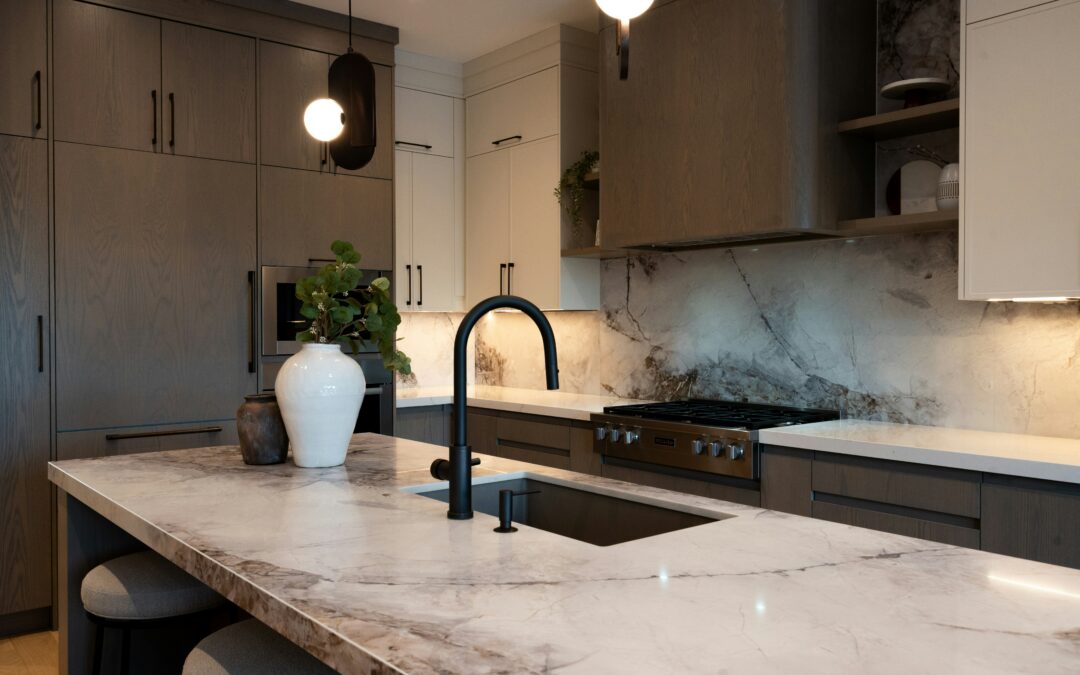
Picking out the right quartz countertop and cabinetry can completely transform your kitchen or bathroom, but making the wrong combinations can leave the space feeling off and difficult to fix later. With so many styles, finishes, and colors available, it is easy to feel unsure about what truly works together.
At Ambiance Creations, we simplify the process by focusing on cohesive design, functionality, and lasting quality. Every selection is guided by how your space will look, feel, and perform over time.
This guide breaks down what matters most, from material benefits to cabinet pairings and design direction, so you can move forward with clarity and confidence.
What Are Quartz Countertops?
Quartz countertops are engineered stone surfaces made from natural quartz crystals combined with resins and pigments, creating a durable, non-porous, and visually consistent material. They are ideal for kitchens and bathrooms due to their low maintenance, stain resistance, and long-lasting polished appearance.
Benefits of Quartz Countertops
One of the main advantages of quartz is its durability, as it resists scratches, chips, and cracks better than many other countertop materials. This makes it a reliable choice for high-traffic kitchens and busy households.
The non-porous surface prevents liquids from penetrating, reducing the risk of stains from coffee, wine, or oil. Unlike granite or marble, quartz does not require sealing, which simplifies long-term maintenance.
Cleaning is straightforward, requiring only mild soap and water, while the consistent appearance ensures there are no unexpected variations after installation. This combination of performance and predictability makes quartz a strong investment.
Quartz vs. Other Countertop Materials
Granite is a natural stone known for its unique patterns, but it requires regular sealing and more maintenance over time. While it offers natural beauty, it may not provide the same level of convenience as quartz.
Quartzite, another natural material, is harder than granite and resembles marble, yet it remains porous and also needs sealing. Marble, while elegant and timeless, is more susceptible to scratching and staining, especially in active kitchens.
Quartz stands apart for its low maintenance, durability, and consistent appearance, making it a practical option for homeowners seeking both beauty and reliability.
Check out kitchen cabinet countertop combinations that always work.
Cabinetry Selection for Quartz Countertops
Selecting the right cabinetry for a quartz countertop and cabinetry design involves balancing style, color, and material to achieve a cohesive result. When these elements are thoughtfully paired, they create a space that feels intentional and well-designed.
Popular Cabinet Styles With Quartz
Shaker Cabinets
Shaker cabinets remain a popular choice due to their clean lines and timeless appeal, allowing the countertop to take center stage without overwhelming the design. They work well in both traditional and transitional interiors, offering flexibility across a wide range of styles.
Flat-Panel Cabinets
Flat-panel cabinets provide a sleek, modern look that pairs beautifully with subtle or solid quartz surfaces. This combination creates a streamlined aesthetic that feels clean, minimal, and highly refined.
Raised Panel Cabinets
Raised panel cabinets introduce depth and detail, making them ideal for more classic or formal spaces. Their dimensional design adds visual richness while complementing warmer or more traditional quartz selections.
Two-Tone Cabinetry
Two-tone cabinetry continues to gain popularity by adding contrast and visual interest. Combining different colors for upper and lower cabinets or emphasizing a kitchen island creates a layered, intentional design.
Color Coordination Tips
Successful design depends on aligning undertones between cabinetry and quartz surfaces, ensuring that warm tones pair with warm hues and cool tones with cool shades. This attention to detail prevents visual clashes and creates a harmonious look.
White cabinetry offers exceptional flexibility, allowing for both bold and subtle quartz designs without overwhelming the space. Dark cabinetry, when paired with lighter quartz, creates contrast and depth, helping the room feel more dynamic and open.
Gray cabinets provide a neutral foundation, though careful attention must be given to undertones so that the combination feels cohesive rather than disjointed.
Learn about eco-friendly cabinetry for healthier, smarter kitchens.
Material Pairings for Cabinets
Wood Cabinetry
Wood cabinetry in finishes such as oak, maple, or walnut introduces warmth and natural texture, balancing the smooth, engineered look of quartz. This pairing creates a refined yet inviting atmosphere that feels both timeless and grounded.
Painted Cabinets
Painted cabinets provide a clean, uniform finish and allow for easier updates over time, making them a flexible option as design preferences evolve. They work especially well in spaces where a consistent, polished appearance is desired.
Thermofoil Cabinets
Thermofoil cabinets offer moisture resistance and easy maintenance, making them a practical choice for high-use kitchens. Their smooth surface also supports a streamlined, modern aesthetic.
Laminate Cabinets
Laminate cabinets expand design possibilities with a wide range of colors, patterns, and finishes, including realistic wood textures and contemporary styles. They pair well with quartz surfaces while offering durability and versatility.
Design Inspirations for Kitchens and Bathrooms
Quartz surfaces provide versatility across a wide range of design styles, allowing homeowners to create spaces that reflect both modern trends and timeless aesthetics.
Modern Design Ideas
Modern kitchens emphasize clean lines, minimal clutter, and intentional design choices, often incorporating handle-free cabinetry paired with white or gray quartz surfaces. This combination creates a seamless and contemporary look.
Waterfall edges on kitchen islands add a sculptural element, extending the quartz vertically for a striking visual effect. Complementary features such as open shelving and geometric lighting further enhance the modern aesthetic.
Quartz supports this design approach with its smooth finish and low-maintenance qualities, helping maintain a clean and polished environment.
Classic and Timeless Looks
White quartz countertops remain a cornerstone of timeless kitchen design, as they pair effortlessly with a wide range of cabinetry styles and finishes. This versatility ensures long-term appeal.
Warm neutral quartz tones, including beige and cream, work beautifully with traditional wood cabinetry, creating an inviting and comfortable atmosphere. Classic fixtures, such as farmhouse sinks or brass hardware, add character while maintaining elegance.
The durability of quartz ensures that these classic designs retain their beauty over time, making them a lasting investment.
Creative Backsplash Integrations
Extending quartz into a full-height backsplash creates a seamless and cohesive appearance, while also simplifying cleaning in high-use areas such as behind sinks and cooktops.
For added contrast, materials like subway tile or glass can introduce visual separation while still complementing the overall design. In bathrooms, vertical quartz installations enhance the space with a refined, spa-like feel while protecting surfaces from moisture.
Installation and Professional Services
Proper installation of quartz countertops and cabinetry is essential to achieving a flawless result, as precision and expertise directly impact both appearance and durability.
Preparing the Space for Installation
Preparing the space involves clearing cabinets, disconnecting appliances, and ensuring installers have full access to the work area. This allows for efficient movement and accurate placement of materials.
It is important to confirm that base cabinets are level and structurally sound, as quartz is a heavy material that requires proper support. Plumbing should be disconnected in advance, and surrounding areas should be protected from dust and debris.
Homeowners should also plan for temporary disruption, as kitchens may be unusable during the installation process.
Choosing the Right Installer
Selecting a qualified installer experienced with quartz materials is critical, as this process differs from working with other surfaces. Reviewing past projects and verifying credentials helps ensure quality results.
Clear communication is essential, including discussing warranties, scope of work, and specific services such as cutouts and backsplash installation. Obtaining multiple detailed quotes allows for informed decision-making.
Precise templating is a key step, as accurate measurements prevent fitting issues and ensure a seamless final installation.
Common Installation Mistakes to Avoid
Avoiding rushed measurements is essential, as even minor inaccuracies can lead to gaps or misalignment. Proper support must be in place, particularly around seams and sink areas, to prevent long-term damage.
Seam placement should be carefully planned and color-matched to maintain a cohesive appearance. Allowing materials to acclimate before installation helps prevent stress caused by temperature changes. Protecting cabinetry during installation is equally important, as heavy materials and tools can cause unintended damage if not handled carefully.
Care and Maintenance Tips
Maintaining the appearance and performance of your quartz countertop and cabinetry requires consistent care, though the process is straightforward and manageable.
Cleaning Quartz Countertops
Daily cleaning with mild soap and warm water helps preserve the surface, while a soft cloth prevents scratches and maintains the finish. For tougher residue, gentle cleaners can be used without damaging the material.
Because quartz is non-porous, it does not require sealing, which simplifies upkeep and reduces long-term maintenance efforts.
Protecting Your Cabinetry
Cabinetry should be protected from moisture by promptly wiping up spills, especially near sinks. Using liners in high-use areas can help prevent damage from leaks or spills over time.
Cleaning with mild soap and a damp cloth maintains the finish, while periodic polishing enhances the appearance of wood cabinetry. Regular inspection of hinges and hardware ensures proper function and alignment.
Longevity and Maintenance Best Practices
Using cutting boards helps prevent surface marks, while placing hot cookware on protective pads avoids heat-related damage. These small habits contribute significantly to long-term durability.
Regularly cleaning handles and hardware prevents buildup, and scheduling periodic deep cleaning allows you to identify and address minor issues before they become larger concerns.
Transform Your Space with Thoughtful Design
A well-executed quartz countertop and cabinetry design brings together beauty, durability, and functionality, creating a space that enhances daily living. Every detail, from material selection to installation, plays a role in the final result.
At Ambiance Creations, each project reflects a commitment to craftsmanship, precision, and thoughtful design. The goal is to create interiors that not only look refined but also support how you live and interact with your space.
Get in touch to begin designing a kitchen or bath that reflects your vision with lasting quality and intention.
Frequently Asked Questions
How do I choose the right quartz countertop and cabinetry combination?
Start by aligning undertones, style, and overall design goals. Warm-toned cabinets pair best with beige or cream quartz, while cool-toned cabinetry works well with gray or white surfaces. The key is creating balance so neither element overpowers the other.
Are quartz countertops better than natural stone?
Quartz offers low maintenance, durability, and consistency, making it a strong choice for busy kitchens. Unlike natural stone, it does not require sealing and resists staining, though some homeowners still prefer the unique patterns found in granite or marble.
What cabinet styles work best with quartz countertops?
Popular options include Shaker, flat-panel, and raised-panel cabinets, each offering a different aesthetic. Shaker works well in most spaces, flat-panel suits modern designs, and raised panel complements more traditional interiors.
Can quartz countertops be used with outdoor kitchens in Florida?
Quartz is best suited for indoor applications, as prolonged exposure to direct sunlight can cause discoloration over time. For outdoor kitchens, alternative materials designed for exterior conditions are typically recommended.
How do I maintain quartz countertops and cabinetry?
Quartz requires simple cleaning with mild soap and water, while cabinetry should be protected from moisture and cleaned regularly with gentle products. Avoid harsh chemicals and always use protective pads for heat and cutting.
How long does installation take for quartz countertops and cabinetry?
Installation timelines vary, but most projects take one to two days for countertops after cabinets are installed. The full process, including design, fabrication, and coordination, may take several weeks depending on project scope.